

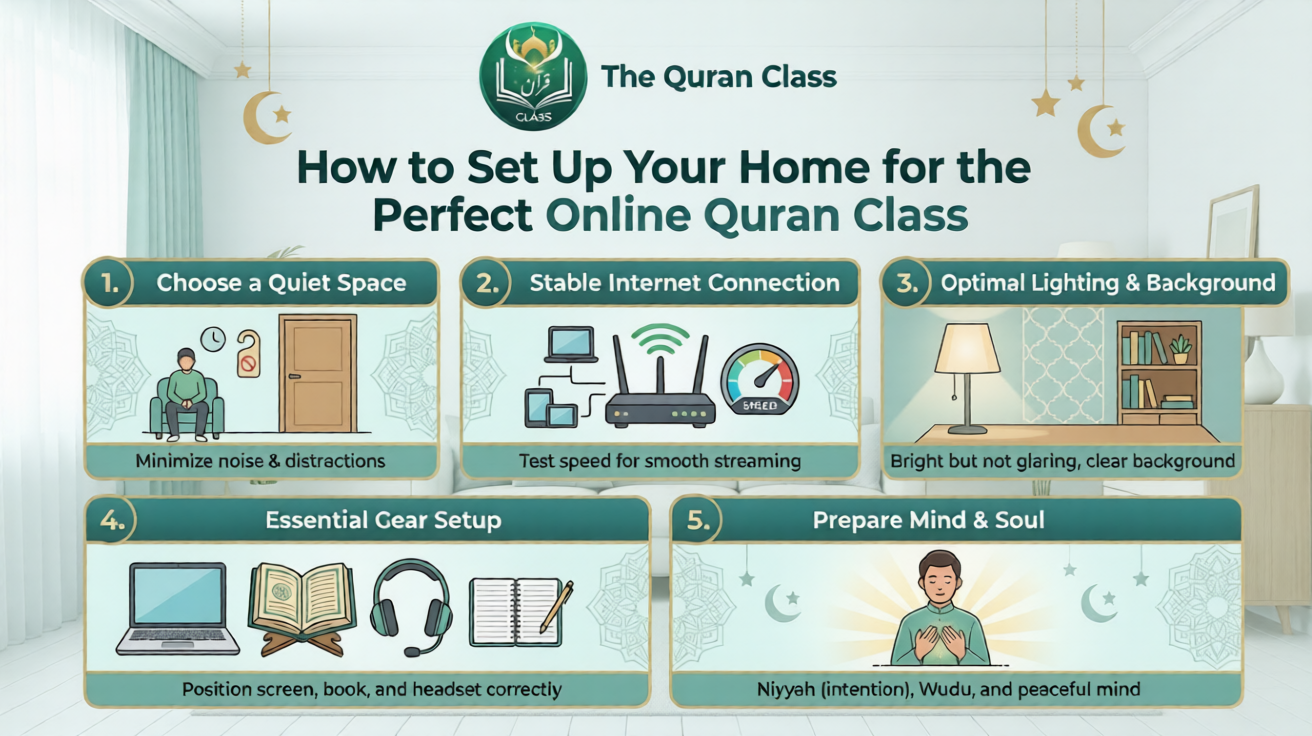
Attending online quran classes with tajweed requires a dedicated, quiet, and highly organized environment inside your home to ensure proper focus. Millions of Muslim families across the USA, UK, and Canada have transitioned to digital Islamic learning platforms. While online education provides unmatched comfort, it also brings unique challenges. The presence of younger siblings, household noises, and poor technical infrastructure can easily ruin a student’s concentration.
Learning the Holy Quran is a sacred spiritual journey. It requires your complete heart, mind, and physical presence. When a student sits in a noisy living room or uses an unstable internet connection, they miss vital pronunciation details. Tajweed relies heavily on listening to subtle mouth movements and specific throat sounds. Therefore, a poor domestic setup directly damages the quality of your education.
In this comprehensive, human-written guide, we will explore exactly how to transform a small corner of your home into a beautiful, distraction-free Islamic classroom. We will look at technical requirements, ideal sitting postures, and family boundaries. By applying these simple steps, you can double your learning speed and build a deeper connection with the scripture.
The Psychology of Space: Why a Dedicated Spot Changes Everything
Our brains are highly responsive to environmental cues. When you sit on your comfortable bed to study, your brain automatically associates that space with relaxation and sleep. As a result, you feel lazy and struggle to stay alert during the class. On the other hand, sitting at a dedicated desk instantly triggers a state of mental readiness and high concentration.
For children, having a fixed learning spot creates a healthy psychological boundary. They know that once they sit in that specific chair, all playtime ends and spiritual discipline begins. This simple structural routine removes the daily struggle of motivating your kids to join their sessions. It makes learning a natural, highly anticipated part of their daily life.
5 Essential Steps to Create the Perfect Learning Environment at Home
Here is your practical, step-by-step checklist to prepare your home for a flawless online learning experience:
1. Choose a Low-Traffic, Secluded Location
Pick a room or a quiet corner that is far away from the television, kitchen, and main house entrance. Avoid communal spaces where family members frequently walk by. A secluded bedroom or a quiet home office is usually the best choice. If you live in a small apartment, you can use a folding room divider screen to block out visual distractions completely.
2. Invest in High-Quality Noise-Canceling Headphones
Never rely on your laptop’s built-in speakers or cheap phone earphones. Standard household sounds like a vacuum cleaner, a boiling kettle, or street traffic can disrupt your class. A solid pair of noise-canceling headphones with an attached microphone ensures clear audio transmission. This allows you to hear the tutor’s precise tongue placements and replicate them flawlessly without any background noise.
3. Optimize Your Digital Device and Internet Connection
A lagging video or broken audio can create massive frustration for both the student and the teacher. Before your session begins, ensure your device is plugged into a reliable power source. If your Wi-Fi signal is weak in your chosen room, consider using an Ethernet cable or installing a Wi-Fi range extender. Close all unnecessary background tabs, gaming apps, and social media notifications to prevent sudden device slowdowns.
4. Maintain Proper Sitting Posture and Islamic Etiquette
The Holy Quran deserves the highest level of physical respect. Students should never slouch on a sofa or lie down while reciting the sacred text. Set up a sturdy table and an ergonomic chair that supports a straight back. Keep the device camera at eye level so the certified tutor can clearly see your facial movements. This structural alignment prevents physical fatigue and helps you maintain maximum focus throughout the session.
5. Gather Your Material Before the Class Begins
Rushing around the house to find a pencil or a notebook mid-class wastes valuable learning time. Create a small, dedicated shelf or a storage box next to your study desk. Keep your Mushaf (physical Quran), notebooks, highlighters, and a bottle of water within arm’s reach. Being fully prepared beforehand shows respect for the sacred knowledge and creates a calm, stress-free transition into your lesson.
Technical Checklist: Hardware and Software Requirements
Let us look at the ideal technical specifications needed to run your interactive digital classroom smoothly without any interruptions:
| Component | Minimum Requirement | Recommended Premium Setup |
|---|---|---|
| Device Type | Standard 6-inch Smartphone or 8-inch Tablet. | 13-inch Laptop, Desktop PC, or an iPad Pro. |
| Internet Speed | Standard 5 Mbps download speed. | 25+ Mbps stable Fiber-Optic connection. |
| Audio Gear | Basic phone earphones with built-in wire mic. | Over-ear USB headset with noise-canceling mic. |
| Lighting Setup | Standard dim overhead room bulb. | Front-facing LED desk lamp or bright natural window light. |
As the comparison table shows, upgrading your hardware setup directly impacts the interactive quality of your session. A larger laptop screen allows young children to read Arabic diacritics (Harakat) easily without straining their eyes.
Establishing Family Boundaries During Class Hours
One of the most common issues in a busy household is accidental interruptions. A sibling might walk into the room to ask a question, or a parent might call out a chore during the live session. To solve this, you must communicate clear, firm boundaries to everyone living in the house.
You can create a simple “Do Not Disturb” sign and hang it on the door handle whenever a class is active. Teach younger children to respect this sign as a symbol of sacred learning time. Furthermore, try to schedule your sessions during hours when the house is naturally quiet, such as early morning before school or late evening after dinner routines.
Frequently Asked Questions
Can we use a smart TV screen to conduct online lessons for young kids?
Yes, casting your tablet or laptop screen to a large living room TV is a fantastic way to keep young children engaged. It allows parents to monitor the class from a distance while keeping the visual elements bold, bright, and easy to read.
What should we do if our internet suddenly disconnects mid-class?
Do not panic. You should keep a 4G/5G mobile hotspot backup ready on your smartphone. Premium academies understand these issues and have clear policies that allow tutors to extend the session or arrange a makeup slot if a technical breakdown occurs.
Is it necessary to have a physical copy of the Quran during online classes?
While most modern portals display interactive digital pages on the screen, having a physical copy of the Mushaf or Noorani Qaida on your desk is highly recommended. It allows you to take physical notes and practice pronunciation rules even when your screen is turned off.
Invest Wisely in Your Spiritual Space
Setting up your home for online quran classes with tajweed is a beautiful form of worship in itself. By dedicating a clean, quiet, and technically sound space to the Book of Allah, you show deep reverence for the divine text and set your entire family up for long-term consistency.
If you are looking for an academy that matches your high household standards and provides flawless interactive structures, your search ends right here.
At The Quran Class, we specialize in offering professional, premium 1-on-1 Islamic education designed entirely for Western families. We feature fully synchronized local timezones, elite certified Arab scholars, and an automated tracking portal to ensure every session is productive, respectful, and highly rewarding.
Give your family the premium spiritual environment they deserve. Book Your Free Trial Lesson at The Quran Class today and start your flawless Tajweed journey!