
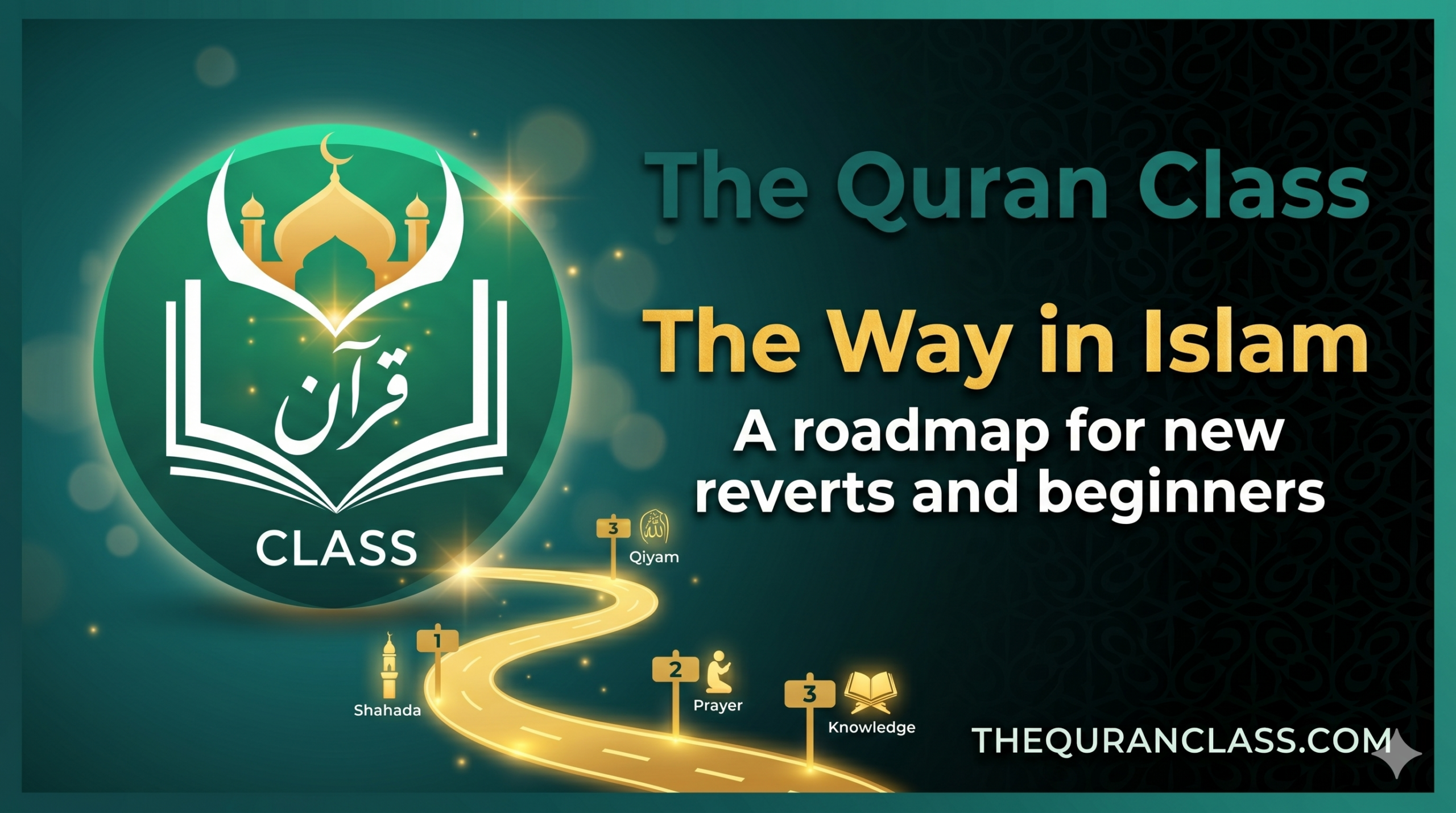
Embracing a new faith is a profound, life-altering experience. If you have recently accepted Islam or are starting to learn about it, welcome. This journey is about finding peace, being clear about what you believe, and having a sense of purpose. It is completely normal to feel a little lost at the beginning.
There is much to learn about Islam, and it can be hard to know where to start. Islam is not about doing certain things at certain times. In reality, islam the way of life is a comprehensive guide that helps you think, behave, and live your daily life in a good way.
This roadmap is specially crafted for new Muslims and beginners. It breaks down the basics of Islam into simple steps. This allows you to build a strong foundation without feeling overwhelmed along the way.
Before you start doing the practices, it is essential to understand what Islam is really about. According to historical records on Wikipedia, the word “Islam” comes from the Arabic root word S-L-M, which means peace, giving in, and surrender. In a spiritual sense, Islam means finding peace inside and outside by giving in to the will of the one God, Allah.
Understanding islam the way of life connects the physical world with the spiritual world beautifully. From how you greet someone you do not know to how you do business, sleep, eat, and pray—everything is structured to bring you closer to your God and help people around you.
The Foundation – The Articles of Faith
Every strong building needs a base. In Islam, that base is faith (Iman). Before you start doing the practices, a Muslim must firmly believe in the six core articles. These articles form the theological basis of islam the way of life.
1. Belief in Allah
The absolute core of Islam is believing in one God (Tawheed). This means believing that Allah is one, unique, and has no partners, children, or equals. He is the creator, the one who takes care of everything, and the absolute ruler of the universe.
2. Belief in the Angels
Angels are creations of Allah made from light that we cannot see. They do not have free will and always obey Allah’s commands perfectly. The most famous angel is Jibreel (Gabriel), who brought messages and divine revelations to the Prophets.
3. Belief in the Holy Books
Muslims believe that Allah sent holy books throughout history to guide people. While other previous books like the Torah and the Bible were changed over time, the Holy Quran remains perfect, preserved, and unchanged.
4. Belief in the Prophets
Allah sent Prophets throughout history to teach people about islam the way of life. This blessed chain includes Prophet Adam, Noah, Abraham, Moses, and Jesus, and ends completely with the final Messenger, Prophet Muhammad (peace be upon him).
5. Belief in the Day of Judgment
This worldly life is temporary and serves as a test. Muslims believe that one day the world will end and everyone will be brought back to life by Allah to answer for what they did.
6. Belief in Divine Decree
This is the belief in destiny (Qadr)—knowing that everything happens according to Allah’s ultimate knowledge and wisdom. Knowing this gives a believer deep patience during hard times and immense gratitude during good times.
The Action – The Five Pillars of Islam
If the Articles of Faith are the inner foundation, the Five Pillars are the physical actions that hold up a Muslim’s daily life. These actions make islam the way of life practical for every human being.
1. The Testimony of Faith (Shahada)
The Testimony of Faith is the gateway to Islam. It is saying: “La ilaha illallah, Muhammadur Rasulullah” (There is no god but Allah, and Muhammad is his messenger). Saying this with a sincere heart officially makes you a Muslim.
2. The Five Daily Prayers (Salah)
The Five Daily Prayers are your direct way to talk to Allah. They are performed five times a day (Fajr, Dhuhr, Asr, Maghrib, and Isha) to keep you grounded.
Tip for beginners: Do not worry if you cannot remember all the Arabic words right away. Start by standing in prayer, following the physical movements, and making a wish (Du’a) in your native language. Proper learning comes with time.
3. Almsgiving (Zakat)
Almsgiving is a compulsory charity given annually by those who can afford it to help the poor and needy. It purifies your wealth and ensures fairness in society.
4. Fasting in Ramadan (Sawm)
During the holy month of Ramadan, Muslims do not eat, drink, or engage in bad behavior from dawn to sunset. Fasting teaches self-control, empathy for the poor, and spiritual purification.
5. The Pilgrimage (Hajj)
The Pilgrimage is traveling to the holy city of Makkah. It is mandatory once in a lifetime for those who are physically and financially able to make the journey.
Navigating Your First Steps Smoothly
As a new Muslim, you might want to change everything about your life right away. However, the revelation of Islam took over 23 years. Taking it one step at a time is the true way of the Prophet. This gradual approach is central to understanding how to adopt islam the way of life.
- Take It Slow: Do not try to learn every single rule, prayer, and Arabic phrase in the very first week. Focus on setting up your daily prayers and understanding the Quran. Allah likes consistency, even if it is a small action.
- Learn How to Perform Ablution (Wudu): Physical cleanliness is half of faith in Islam. Before praying, you must wash your hands, mouth, nose, face, arms, wipe your head, and wash your feet.
- Connect with the Quran: Make the Quran your daily companion. Read a translation in your language to understand what Allah is saying to you. Listen to regular Quran recitations; the rhythm has a deeply soothing effect on the human soul.
Embracing Islam the Way of Life in the Modern World
When we say islam the way of life, we mean that Islam gives a beautiful, complete plan for every single part of human life. It covers individual morality as well as community guidelines.
Character and Manners
Prophet Muhammad (PBUH) emphasized good character throughout his life. As recorded in the authentic narrations of Sahih al-Bukhari, having excellent manners is a core part of faith. In Islam, even smiling at someone is considered an act of charity. Being honest, kind to parents, helping neighbors, and controlling anger are vital parts of being a Muslim.
Dietary Choices (Halal & Haram)
Islam promotes a clean and healthy lifestyle. Food that is allowed is called Halal. What is not allowed is Haram (like pork and alcohol). Changing to a Halal diet might take some time, but it is excellent for your physical health and spiritual purity.
Modesty (Haya)
Modesty is a core value in Islam for both men and women. It shows in how you dress, how you speak, and how you behave in public. It is a beautiful sign of respect for yourself and for your Creator.
Overcoming Common Challenges for New Muslims
Choosing a new spiritual path can be hard. Knowing about the common challenges is the first step to overcoming them successfully. This allows you to practice islam the way of life without constant stress.
1. Dealing with Family and Friends
Your loved ones might be confused, scared, or resistant to your conversion. The best solution is to be patient and show them the beauty of Islam through your refined actions. When they see that Islam has made you a better, gentler, and more loving person, they will understand.
2. Feeling Lonely
Many new Muslims feel lonely during major holidays like Eid. The solution is to visit your local mosque regularly. Look for trusted online Muslim groups for new reverts. Building a healthy Muslim community takes time, but it is important for spiritual growth.
3. Overcoming Guilt Over Past Mistakes
A beautiful thing about islam the way of life is that the moment you say the Testimony of Faith, all your past sins are completely forgiven. You start with a clean slate. Do not let Satan make you feel unworthy of Allah’s mercy because of your past.
Your Daily Muslim Checklist
To help you live islam the way of life effortlessly every day, here is a simple list to follow:
| Time | Action | Spiritual Focus |
|---|---|---|
| Morning | Wake up for prayer (Fajr) | Start the day with deep gratitude to Allah. |
| Daytime | Do your prayers (Dhuhr & Asr) | Take a break from work to reconnect with God. |
| Interactions | Keep a smiling face, use kind words | Turn daily routines into acts of worship. |
| Evening | Do your prayers (Maghrib & Isha) | Reflect on your day and ask for forgiveness. |
| Night | Read the Holy Quran | End the day with divine wisdom and absolute peace. |
Continuous Learning with The Quran Class
The journey of a Muslim is a continuous process of learning, growing, and seeking closeness to Allah. Remember, Allah does not expect you to be perfect right away; he values your sincere effort. If you take one single step towards Allah, he takes ten steps towards you.
If you want to learn how to read the Quran, understand its deep meanings, or study the basics of Islamic law and Arabic, you do not have to do it alone.
At The Quran Class, we provide online classes designed specifically for beginners and new Muslims. Let us help you live islam the way of life with authentic knowledge and highly supportive teachers.
Ready to take your next step? Explore our courses at The Quran Class today and start your beautiful journey with the Book of Allah.
Keep learning: certify your recitation through our online Ijazah course
Grow closer to Allah every day by reflecting on His beautiful 99 Names of Allah