
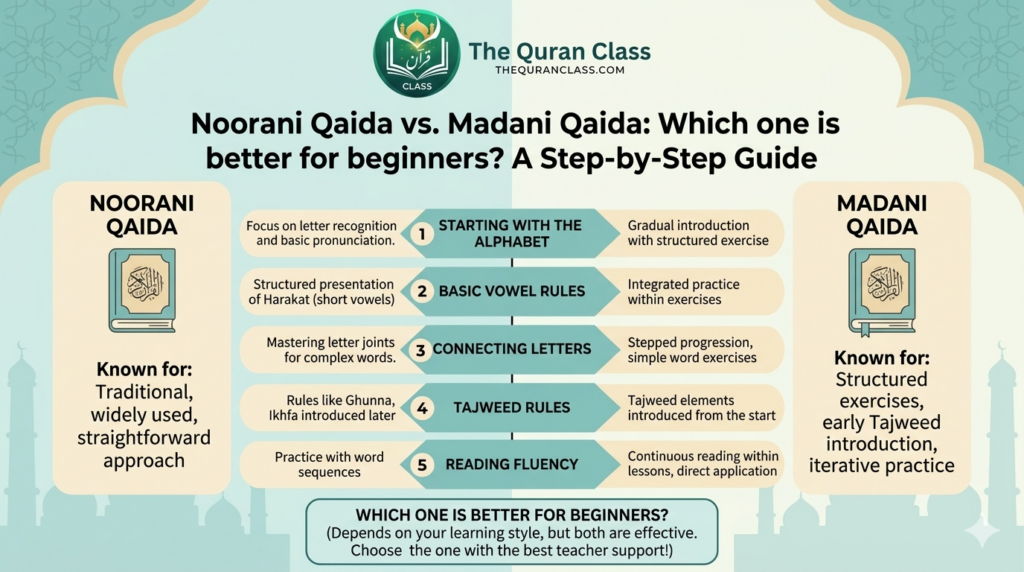
Noorani Qaida vs Madani Qaida is one of the most common questions parents ask before starting Quran classes. Both are beginner pathways to Quran reading, and both can be effective when taught correctly. The right choice depends on learner age, teacher method, and learning pace.
This guide explains the key differences in simple English so families can choose confidently.
What Noorani Qaida and Madani Qaida are
Noorani Qaida is a foundational booklet focused on letter recognition, joining rules, and pronunciation flow through gradual progression. Madani Qaida also teaches fundamentals but may differ in sequencing style, page design, and pacing depending on the curriculum used by the academy.
9 key differences for beginners
- Progression style: Noorani Qaida often uses very step-by-step drilling, while Madani Qaida may move faster in some sections.
- Visual layout: some learners respond better to one format over the other.
- Phonetic repetition: Noorani programs usually include heavier repetition early.
- Classroom adoption: teacher familiarity affects results more than booklet branding.
- Pacing for kids: younger children may benefit from slower structured progression.
- Pronunciation focus: both can support Tajweed basics when tutor correction is strong.
- Homework style: some centers assign more oral drills in Noorani tracks.
- Transition to Quran text: timing varies by student consistency and supervision.
- Parent involvement: weekly review is critical in both methods.
Which one is better for beginners?
There is no universal winner. The better option is the one taught by a skilled teacher with clear correction, proper makhraj focus, and consistent revision. A strong tutor can produce excellent results with either Noorani Qaida or Madani Qaida.
So instead of asking only “which book is better,” ask:
- How does the tutor track weekly progress?
- How are pronunciation mistakes corrected?
- Is one-on-one support available when needed?
- How does the academy transition students to real Quran pages?
Best approach for parents
If your child is a true beginner, start with whichever qaida your teacher handles best. Keep sessions short, consistent, and supervised. Ask for measurable checkpoints every 2-3 weeks. Most delays happen because families switch methods repeatedly without completing one structured track.
How long does qaida stage usually take?
For regular learners, qaida foundations often take a few months depending on age, attendance, and home revision quality. Students with daily short practice usually progress much faster than students with irregular long sessions.
Noorani Qaida vs Madani Qaida and long-term Tajweed
Early qaida learning is not only about finishing pages. It builds pronunciation habits that shape future Tajweed quality. Strong qaida foundation means easier transition to Quran with Tajweed, fewer recurring errors, and better recitation confidence.
Final recommendation
Choose the method your teacher teaches confidently, then commit with consistency. If you are looking for structured support from an online quran academy, make sure progress tracking and one-on-one correction are part of the plan. You can also review sample Quran text at Quran.com to support home revision. With the right teaching method and schedule, both Noorani Qaida and Madani Qaida can lead beginners to strong Quran reading foundations.