Frequently Asked Questions (FAQs) for Beginners
What are the basic beliefs in Islam for beginners?
Islam is built on six fundamental articles of faith: belief in One God (Allah), belief in His angels, belief in His revealed books (including the Torah, Gospel, and Quran), belief in all His prophets, belief in the Day of Judgment, and belief in divine destiny (Qadr).
How can non-Arabic speakers start learning the Quran?
Beginners can start by learning the Arabic alphabet and basic pronunciation using the Noorani Qaida, followed by Tajweed rules, and then progressing to reading full Quranic chapters. Enrolling in live 1-on-1 online classes with certified tutors provides personalized guidance and feedback.
Is learning the Quran online effective for children?
Yes! Online Quran classes offer customized 1-on-1 attention, flexible scheduling to accommodate Western school hours, and engaging digital tools that make Quran learning enjoyable and consistent for kids.
Start Your Quran Learning Journey Today
Whether you want to improve your Tajweed, start memorizing the Quran, or teach your children foundational Islamic values, The Quran Class provides live 1-on-1 online lessons with certified male and female tutors.
Book a 3-Day Free Trial Class Today and experience interactive, personalized Quran learning from the comfort of your home!
14. Seeking Knowledge is an Obligation for Every Muslim
The very first word revealed in the Holy Quran was “Iqra” (إقْرَأْ), which translates to “Read!” or “Recite!”. Prophet Muhammad (peace be upon him) famously stated: “Seeking knowledge is an obligation upon every Muslim.” (Sunan Ibn Majah). Throughout history, this divine emphasis sparked the Islamic Golden Age, yielding groundbreaking advances in algebra, optics, medicine, astronomy, and literature.
15. Quran Recitation Follows Precise Melodic Rules Called Tajweed
Reciting the Quran is not like reading an ordinary book. It follows a dedicated art and science known as Tajweed—a set of linguistic and phonetic rules governing the precise articulation points (Makharij), elongations, and characteristics of every Arabic letter to ensure the beauty and exact meaning of the verses remain uncorrupted.
Master correct Quran recitation from certified teachers with our Online Tajweed Course or enroll your children in our fun, structured Online Quran Classes for Kids.
Frequently Asked Questions (FAQs) for Beginners
What are the basic beliefs in Islam for beginners?
Islam is built on six fundamental articles of faith: belief in One God (Allah), belief in His angels, belief in His revealed books (including the Torah, Gospel, and Quran), belief in all His prophets, belief in the Day of Judgment, and belief in divine destiny (Qadr).
How can non-Arabic speakers start learning the Quran?
Beginners can start by learning the Arabic alphabet and basic pronunciation using the Noorani Qaida, followed by Tajweed rules, and then progressing to reading full Quranic chapters. Enrolling in live 1-on-1 online classes with certified tutors provides personalized guidance and feedback.
Is learning the Quran online effective for children?
Yes! Online Quran classes offer customized 1-on-1 attention, flexible scheduling to accommodate Western school hours, and engaging digital tools that make Quran learning enjoyable and consistent for kids.
Start Your Quran Learning Journey Today
Whether you want to improve your Tajweed, start memorizing the Quran, or teach your children foundational Islamic values, The Quran Class provides live 1-on-1 online lessons with certified male and female tutors.
Book a 3-Day Free Trial Class Today and experience interactive, personalized Quran learning from the comfort of your home!
13. Quranic Arabic Has Preserved Its Original Form for Over 1,400 Years
While ancient languages like Latin or Old English evolved dramatically or ceased being spoken, Classical Quranic Arabic remains vibrant, preserved, and actively studied worldwide. Learning Quranic Arabic allows students to connect directly with the original divine revelation without relying solely on English translations.
Start your language journey with our interactive Learn Quranic Arabic Online Course.
14. Seeking Knowledge is an Obligation for Every Muslim
The very first word revealed in the Holy Quran was “Iqra” (إقْرَأْ), which translates to “Read!” or “Recite!”. Prophet Muhammad (peace be upon him) famously stated: “Seeking knowledge is an obligation upon every Muslim.” (Sunan Ibn Majah). Throughout history, this divine emphasis sparked the Islamic Golden Age, yielding groundbreaking advances in algebra, optics, medicine, astronomy, and literature.
15. Quran Recitation Follows Precise Melodic Rules Called Tajweed
Reciting the Quran is not like reading an ordinary book. It follows a dedicated art and science known as Tajweed—a set of linguistic and phonetic rules governing the precise articulation points (Makharij), elongations, and characteristics of every Arabic letter to ensure the beauty and exact meaning of the verses remain uncorrupted.
Master correct Quran recitation from certified teachers with our Online Tajweed Course or enroll your children in our fun, structured Online Quran Classes for Kids.
Frequently Asked Questions (FAQs) for Beginners
What are the basic beliefs in Islam for beginners?
Islam is built on six fundamental articles of faith: belief in One God (Allah), belief in His angels, belief in His revealed books (including the Torah, Gospel, and Quran), belief in all His prophets, belief in the Day of Judgment, and belief in divine destiny (Qadr).
How can non-Arabic speakers start learning the Quran?
Beginners can start by learning the Arabic alphabet and basic pronunciation using the Noorani Qaida, followed by Tajweed rules, and then progressing to reading full Quranic chapters. Enrolling in live 1-on-1 online classes with certified tutors provides personalized guidance and feedback.
Is learning the Quran online effective for children?
Yes! Online Quran classes offer customized 1-on-1 attention, flexible scheduling to accommodate Western school hours, and engaging digital tools that make Quran learning enjoyable and consistent for kids.
Start Your Quran Learning Journey Today
Whether you want to improve your Tajweed, start memorizing the Quran, or teach your children foundational Islamic values, The Quran Class provides live 1-on-1 online lessons with certified male and female tutors.
Book a 3-Day Free Trial Class Today and experience interactive, personalized Quran learning from the comfort of your home!
12. The Islamic Calendar is Based Entirely on the Lunar Cycle
Unlike the Gregorian solar calendar (365 days), the Islamic (Hijri) calendar follows the 12 cycles of the moon, lasting approximately 354 or 355 days per year. Because the lunar year is about 11 days shorter than the solar year, sacred Islamic occasions like Ramadan and Eid move gradually across all four seasons over a 33-year cycle!
Check key upcoming Islamic dates on our Hijri Islamic Calendar page.
13. Quranic Arabic Has Preserved Its Original Form for Over 1,400 Years
While ancient languages like Latin or Old English evolved dramatically or ceased being spoken, Classical Quranic Arabic remains vibrant, preserved, and actively studied worldwide. Learning Quranic Arabic allows students to connect directly with the original divine revelation without relying solely on English translations.
Start your language journey with our interactive Learn Quranic Arabic Online Course.
14. Seeking Knowledge is an Obligation for Every Muslim
The very first word revealed in the Holy Quran was “Iqra” (إقْرَأْ), which translates to “Read!” or “Recite!”. Prophet Muhammad (peace be upon him) famously stated: “Seeking knowledge is an obligation upon every Muslim.” (Sunan Ibn Majah). Throughout history, this divine emphasis sparked the Islamic Golden Age, yielding groundbreaking advances in algebra, optics, medicine, astronomy, and literature.
15. Quran Recitation Follows Precise Melodic Rules Called Tajweed
Reciting the Quran is not like reading an ordinary book. It follows a dedicated art and science known as Tajweed—a set of linguistic and phonetic rules governing the precise articulation points (Makharij), elongations, and characteristics of every Arabic letter to ensure the beauty and exact meaning of the verses remain uncorrupted.
Master correct Quran recitation from certified teachers with our Online Tajweed Course or enroll your children in our fun, structured Online Quran Classes for Kids.
Frequently Asked Questions (FAQs) for Beginners
What are the basic beliefs in Islam for beginners?
Islam is built on six fundamental articles of faith: belief in One God (Allah), belief in His angels, belief in His revealed books (including the Torah, Gospel, and Quran), belief in all His prophets, belief in the Day of Judgment, and belief in divine destiny (Qadr).
How can non-Arabic speakers start learning the Quran?
Beginners can start by learning the Arabic alphabet and basic pronunciation using the Noorani Qaida, followed by Tajweed rules, and then progressing to reading full Quranic chapters. Enrolling in live 1-on-1 online classes with certified tutors provides personalized guidance and feedback.
Is learning the Quran online effective for children?
Yes! Online Quran classes offer customized 1-on-1 attention, flexible scheduling to accommodate Western school hours, and engaging digital tools that make Quran learning enjoyable and consistent for kids.
Start Your Quran Learning Journey Today
Whether you want to improve your Tajweed, start memorizing the Quran, or teach your children foundational Islamic values, The Quran Class provides live 1-on-1 online lessons with certified male and female tutors.
Book a 3-Day Free Trial Class Today and experience interactive, personalized Quran learning from the comfort of your home!
11. Charity (Zakat and Sadaqah) is an Essential Pillar of Life
Islam views wealth as a trust from God. Giving to those in need is not merely an optional favor; mandatory charity (Zakat, 2.5% of accumulated surplus savings annually) is an obligation upon every qualifying Muslim to purify their wealth and ensure socio-economic balance in society. Voluntary acts of kindness (Sadaqah) can be anything from donating money to offering a kind word or a warm smile.
12. The Islamic Calendar is Based Entirely on the Lunar Cycle
Unlike the Gregorian solar calendar (365 days), the Islamic (Hijri) calendar follows the 12 cycles of the moon, lasting approximately 354 or 355 days per year. Because the lunar year is about 11 days shorter than the solar year, sacred Islamic occasions like Ramadan and Eid move gradually across all four seasons over a 33-year cycle!
Check key upcoming Islamic dates on our Hijri Islamic Calendar page.
13. Quranic Arabic Has Preserved Its Original Form for Over 1,400 Years
While ancient languages like Latin or Old English evolved dramatically or ceased being spoken, Classical Quranic Arabic remains vibrant, preserved, and actively studied worldwide. Learning Quranic Arabic allows students to connect directly with the original divine revelation without relying solely on English translations.
Start your language journey with our interactive Learn Quranic Arabic Online Course.
14. Seeking Knowledge is an Obligation for Every Muslim
The very first word revealed in the Holy Quran was “Iqra” (إقْرَأْ), which translates to “Read!” or “Recite!”. Prophet Muhammad (peace be upon him) famously stated: “Seeking knowledge is an obligation upon every Muslim.” (Sunan Ibn Majah). Throughout history, this divine emphasis sparked the Islamic Golden Age, yielding groundbreaking advances in algebra, optics, medicine, astronomy, and literature.
15. Quran Recitation Follows Precise Melodic Rules Called Tajweed
Reciting the Quran is not like reading an ordinary book. It follows a dedicated art and science known as Tajweed—a set of linguistic and phonetic rules governing the precise articulation points (Makharij), elongations, and characteristics of every Arabic letter to ensure the beauty and exact meaning of the verses remain uncorrupted.
Master correct Quran recitation from certified teachers with our Online Tajweed Course or enroll your children in our fun, structured Online Quran Classes for Kids.
Frequently Asked Questions (FAQs) for Beginners
What are the basic beliefs in Islam for beginners?
Islam is built on six fundamental articles of faith: belief in One God (Allah), belief in His angels, belief in His revealed books (including the Torah, Gospel, and Quran), belief in all His prophets, belief in the Day of Judgment, and belief in divine destiny (Qadr).
How can non-Arabic speakers start learning the Quran?
Beginners can start by learning the Arabic alphabet and basic pronunciation using the Noorani Qaida, followed by Tajweed rules, and then progressing to reading full Quranic chapters. Enrolling in live 1-on-1 online classes with certified tutors provides personalized guidance and feedback.
Is learning the Quran online effective for children?
Yes! Online Quran classes offer customized 1-on-1 attention, flexible scheduling to accommodate Western school hours, and engaging digital tools that make Quran learning enjoyable and consistent for kids.
Start Your Quran Learning Journey Today
Whether you want to improve your Tajweed, start memorizing the Quran, or teach your children foundational Islamic values, The Quran Class provides live 1-on-1 online lessons with certified male and female tutors.
Book a 3-Day Free Trial Class Today and experience interactive, personalized Quran learning from the comfort of your home!
10. Muslims Pray 5 Times Daily Facing the Kaaba in Makkah
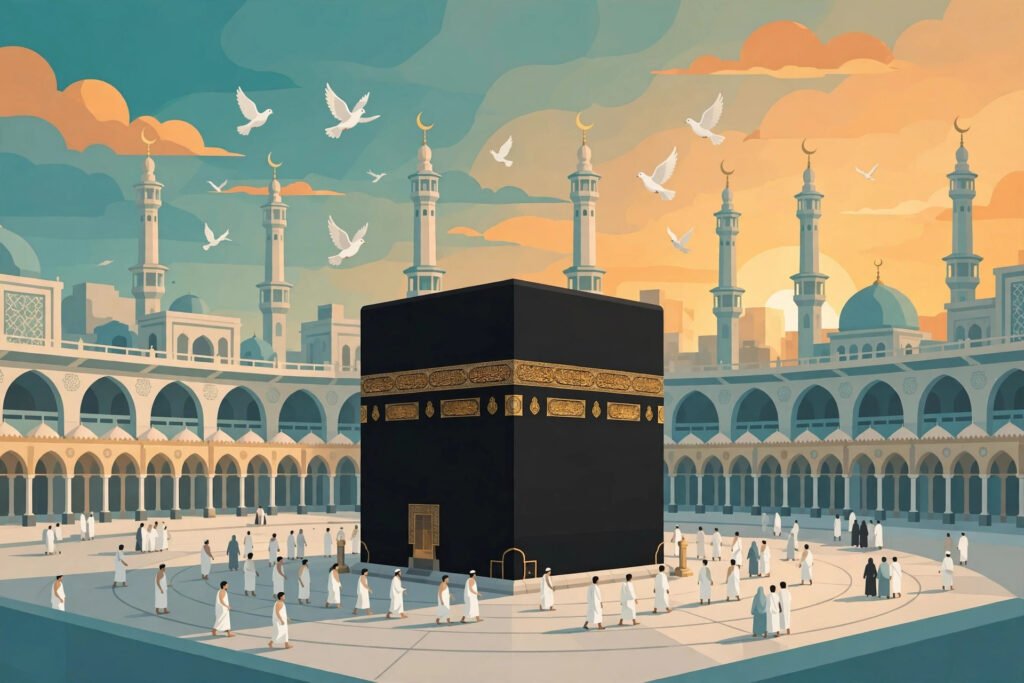
Every single day, Muslims across the globe pause their daily routines to connect spiritually with Allah through five scheduled prayers (Fajr, Dhuhr, Asr, Maghrib, and Isha). No matter where they are—in New York, London, Tokyo, or Sydney—all Muslims align in the exact same direction (the Qibla) facing the Kaaba in Makkah, symbolizing profound global unity and brotherhood.
Looking for accurate daily prayer timings? Use our free Islamic Prayer Times & Qibla Finder tool.
11. Charity (Zakat and Sadaqah) is an Essential Pillar of Life
Islam views wealth as a trust from God. Giving to those in need is not merely an optional favor; mandatory charity (Zakat, 2.5% of accumulated surplus savings annually) is an obligation upon every qualifying Muslim to purify their wealth and ensure socio-economic balance in society. Voluntary acts of kindness (Sadaqah) can be anything from donating money to offering a kind word or a warm smile.
12. The Islamic Calendar is Based Entirely on the Lunar Cycle
Unlike the Gregorian solar calendar (365 days), the Islamic (Hijri) calendar follows the 12 cycles of the moon, lasting approximately 354 or 355 days per year. Because the lunar year is about 11 days shorter than the solar year, sacred Islamic occasions like Ramadan and Eid move gradually across all four seasons over a 33-year cycle!
Check key upcoming Islamic dates on our Hijri Islamic Calendar page.
13. Quranic Arabic Has Preserved Its Original Form for Over 1,400 Years
While ancient languages like Latin or Old English evolved dramatically or ceased being spoken, Classical Quranic Arabic remains vibrant, preserved, and actively studied worldwide. Learning Quranic Arabic allows students to connect directly with the original divine revelation without relying solely on English translations.
Start your language journey with our interactive Learn Quranic Arabic Online Course.
14. Seeking Knowledge is an Obligation for Every Muslim
The very first word revealed in the Holy Quran was “Iqra” (إقْرَأْ), which translates to “Read!” or “Recite!”. Prophet Muhammad (peace be upon him) famously stated: “Seeking knowledge is an obligation upon every Muslim.” (Sunan Ibn Majah). Throughout history, this divine emphasis sparked the Islamic Golden Age, yielding groundbreaking advances in algebra, optics, medicine, astronomy, and literature.
15. Quran Recitation Follows Precise Melodic Rules Called Tajweed
Reciting the Quran is not like reading an ordinary book. It follows a dedicated art and science known as Tajweed—a set of linguistic and phonetic rules governing the precise articulation points (Makharij), elongations, and characteristics of every Arabic letter to ensure the beauty and exact meaning of the verses remain uncorrupted.
Master correct Quran recitation from certified teachers with our Online Tajweed Course or enroll your children in our fun, structured Online Quran Classes for Kids.
Frequently Asked Questions (FAQs) for Beginners
What are the basic beliefs in Islam for beginners?
Islam is built on six fundamental articles of faith: belief in One God (Allah), belief in His angels, belief in His revealed books (including the Torah, Gospel, and Quran), belief in all His prophets, belief in the Day of Judgment, and belief in divine destiny (Qadr).
How can non-Arabic speakers start learning the Quran?
Beginners can start by learning the Arabic alphabet and basic pronunciation using the Noorani Qaida, followed by Tajweed rules, and then progressing to reading full Quranic chapters. Enrolling in live 1-on-1 online classes with certified tutors provides personalized guidance and feedback.
Is learning the Quran online effective for children?
Yes! Online Quran classes offer customized 1-on-1 attention, flexible scheduling to accommodate Western school hours, and engaging digital tools that make Quran learning enjoyable and consistent for kids.
Start Your Quran Learning Journey Today
Whether you want to improve your Tajweed, start memorizing the Quran, or teach your children foundational Islamic values, The Quran Class provides live 1-on-1 online lessons with certified male and female tutors.
Book a 3-Day Free Trial Class Today and experience interactive, personalized Quran learning from the comfort of your home!
9. A Short Inspiring Islamic Story: The Woman and the Thirsty Dog
Compassion in Islam extends to all living beings. In a famous and authentic Hadith, Prophet Muhammad (peace be upon him) shared the story of a person who saw a thirsty dog panting and licking moist dirt near a well. Taking pity on the suffering animal, the person climbed down into the deep well, filled their leather sock with water, held it between their teeth, and climbed back up to give water to the thirsty dog. God appreciated this sincere act of kindness and forgave all their previous sins.
This powerful lesson teaches that no act of sincere kindness—even giving water to a thirsty animal—is ever insignificant in the sight of Allah.
10. Muslims Pray 5 Times Daily Facing the Kaaba in Makkah
Every single day, Muslims across the globe pause their daily routines to connect spiritually with Allah through five scheduled prayers (Fajr, Dhuhr, Asr, Maghrib, and Isha). No matter where they are—in New York, London, Tokyo, or Sydney—all Muslims align in the exact same direction (the Qibla) facing the Kaaba in Makkah, symbolizing profound global unity and brotherhood.
Looking for accurate daily prayer timings? Use our free Islamic Prayer Times & Qibla Finder tool.
11. Charity (Zakat and Sadaqah) is an Essential Pillar of Life
Islam views wealth as a trust from God. Giving to those in need is not merely an optional favor; mandatory charity (Zakat, 2.5% of accumulated surplus savings annually) is an obligation upon every qualifying Muslim to purify their wealth and ensure socio-economic balance in society. Voluntary acts of kindness (Sadaqah) can be anything from donating money to offering a kind word or a warm smile.
12. The Islamic Calendar is Based Entirely on the Lunar Cycle
Unlike the Gregorian solar calendar (365 days), the Islamic (Hijri) calendar follows the 12 cycles of the moon, lasting approximately 354 or 355 days per year. Because the lunar year is about 11 days shorter than the solar year, sacred Islamic occasions like Ramadan and Eid move gradually across all four seasons over a 33-year cycle!
Check key upcoming Islamic dates on our Hijri Islamic Calendar page.
13. Quranic Arabic Has Preserved Its Original Form for Over 1,400 Years
While ancient languages like Latin or Old English evolved dramatically or ceased being spoken, Classical Quranic Arabic remains vibrant, preserved, and actively studied worldwide. Learning Quranic Arabic allows students to connect directly with the original divine revelation without relying solely on English translations.
Start your language journey with our interactive Learn Quranic Arabic Online Course.
14. Seeking Knowledge is an Obligation for Every Muslim
The very first word revealed in the Holy Quran was “Iqra” (إقْرَأْ), which translates to “Read!” or “Recite!”. Prophet Muhammad (peace be upon him) famously stated: “Seeking knowledge is an obligation upon every Muslim.” (Sunan Ibn Majah). Throughout history, this divine emphasis sparked the Islamic Golden Age, yielding groundbreaking advances in algebra, optics, medicine, astronomy, and literature.
15. Quran Recitation Follows Precise Melodic Rules Called Tajweed
Reciting the Quran is not like reading an ordinary book. It follows a dedicated art and science known as Tajweed—a set of linguistic and phonetic rules governing the precise articulation points (Makharij), elongations, and characteristics of every Arabic letter to ensure the beauty and exact meaning of the verses remain uncorrupted.
Master correct Quran recitation from certified teachers with our Online Tajweed Course or enroll your children in our fun, structured Online Quran Classes for Kids.
Frequently Asked Questions (FAQs) for Beginners
What are the basic beliefs in Islam for beginners?
Islam is built on six fundamental articles of faith: belief in One God (Allah), belief in His angels, belief in His revealed books (including the Torah, Gospel, and Quran), belief in all His prophets, belief in the Day of Judgment, and belief in divine destiny (Qadr).
How can non-Arabic speakers start learning the Quran?
Beginners can start by learning the Arabic alphabet and basic pronunciation using the Noorani Qaida, followed by Tajweed rules, and then progressing to reading full Quranic chapters. Enrolling in live 1-on-1 online classes with certified tutors provides personalized guidance and feedback.
Is learning the Quran online effective for children?
Yes! Online Quran classes offer customized 1-on-1 attention, flexible scheduling to accommodate Western school hours, and engaging digital tools that make Quran learning enjoyable and consistent for kids.
Start Your Quran Learning Journey Today
Whether you want to improve your Tajweed, start memorizing the Quran, or teach your children foundational Islamic values, The Quran Class provides live 1-on-1 online lessons with certified male and female tutors.
Book a 3-Day Free Trial Class Today and experience interactive, personalized Quran learning from the comfort of your home!
8. Cats Hold a Cherished, Special Place in Islamic Tradition
Cats are beloved in Islamic culture and are admired for their cleanliness. Prophet Muhammad (peace be upon him) was well known for his affection and gentle care towards animals, particularly cats. It is narrated that one of his closest companions was nicknamed Abu Hurairah (which affectionately translates to “Father of the Kitten”) because he always cared for small cats.
9. A Short Inspiring Islamic Story: The Woman and the Thirsty Dog
Compassion in Islam extends to all living beings. In a famous and authentic Hadith, Prophet Muhammad (peace be upon him) shared the story of a person who saw a thirsty dog panting and licking moist dirt near a well. Taking pity on the suffering animal, the person climbed down into the deep well, filled their leather sock with water, held it between their teeth, and climbed back up to give water to the thirsty dog. God appreciated this sincere act of kindness and forgave all their previous sins.
This powerful lesson teaches that no act of sincere kindness—even giving water to a thirsty animal—is ever insignificant in the sight of Allah.
10. Muslims Pray 5 Times Daily Facing the Kaaba in Makkah
Every single day, Muslims across the globe pause their daily routines to connect spiritually with Allah through five scheduled prayers (Fajr, Dhuhr, Asr, Maghrib, and Isha). No matter where they are—in New York, London, Tokyo, or Sydney—all Muslims align in the exact same direction (the Qibla) facing the Kaaba in Makkah, symbolizing profound global unity and brotherhood.
Looking for accurate daily prayer timings? Use our free Islamic Prayer Times & Qibla Finder tool.
11. Charity (Zakat and Sadaqah) is an Essential Pillar of Life
Islam views wealth as a trust from God. Giving to those in need is not merely an optional favor; mandatory charity (Zakat, 2.5% of accumulated surplus savings annually) is an obligation upon every qualifying Muslim to purify their wealth and ensure socio-economic balance in society. Voluntary acts of kindness (Sadaqah) can be anything from donating money to offering a kind word or a warm smile.
12. The Islamic Calendar is Based Entirely on the Lunar Cycle
Unlike the Gregorian solar calendar (365 days), the Islamic (Hijri) calendar follows the 12 cycles of the moon, lasting approximately 354 or 355 days per year. Because the lunar year is about 11 days shorter than the solar year, sacred Islamic occasions like Ramadan and Eid move gradually across all four seasons over a 33-year cycle!
Check key upcoming Islamic dates on our Hijri Islamic Calendar page.
13. Quranic Arabic Has Preserved Its Original Form for Over 1,400 Years
While ancient languages like Latin or Old English evolved dramatically or ceased being spoken, Classical Quranic Arabic remains vibrant, preserved, and actively studied worldwide. Learning Quranic Arabic allows students to connect directly with the original divine revelation without relying solely on English translations.
Start your language journey with our interactive Learn Quranic Arabic Online Course.
14. Seeking Knowledge is an Obligation for Every Muslim
The very first word revealed in the Holy Quran was “Iqra” (إقْرَأْ), which translates to “Read!” or “Recite!”. Prophet Muhammad (peace be upon him) famously stated: “Seeking knowledge is an obligation upon every Muslim.” (Sunan Ibn Majah). Throughout history, this divine emphasis sparked the Islamic Golden Age, yielding groundbreaking advances in algebra, optics, medicine, astronomy, and literature.
15. Quran Recitation Follows Precise Melodic Rules Called Tajweed
Reciting the Quran is not like reading an ordinary book. It follows a dedicated art and science known as Tajweed—a set of linguistic and phonetic rules governing the precise articulation points (Makharij), elongations, and characteristics of every Arabic letter to ensure the beauty and exact meaning of the verses remain uncorrupted.
Master correct Quran recitation from certified teachers with our Online Tajweed Course or enroll your children in our fun, structured Online Quran Classes for Kids.
Frequently Asked Questions (FAQs) for Beginners
What are the basic beliefs in Islam for beginners?
Islam is built on six fundamental articles of faith: belief in One God (Allah), belief in His angels, belief in His revealed books (including the Torah, Gospel, and Quran), belief in all His prophets, belief in the Day of Judgment, and belief in divine destiny (Qadr).
How can non-Arabic speakers start learning the Quran?
Beginners can start by learning the Arabic alphabet and basic pronunciation using the Noorani Qaida, followed by Tajweed rules, and then progressing to reading full Quranic chapters. Enrolling in live 1-on-1 online classes with certified tutors provides personalized guidance and feedback.
Is learning the Quran online effective for children?
Yes! Online Quran classes offer customized 1-on-1 attention, flexible scheduling to accommodate Western school hours, and engaging digital tools that make Quran learning enjoyable and consistent for kids.
Start Your Quran Learning Journey Today
Whether you want to improve your Tajweed, start memorizing the Quran, or teach your children foundational Islamic values, The Quran Class provides live 1-on-1 online lessons with certified male and female tutors.
Book a 3-Day Free Trial Class Today and experience interactive, personalized Quran learning from the comfort of your home!
7. The Oldest Continuously Operating University in the World was Founded by a Muslim Woman
In 859 CE, a Muslim woman named Fatima al-Fihri founded the University of al-Qarawiyyin in Fez, Morocco. Recognized by UNESCO and the Guinness World Records as the oldest continually operating higher education institution in the world, it highlights Islam’s deep historical legacy of promoting knowledge, scholarship, and education for all.
8. Cats Hold a Cherished, Special Place in Islamic Tradition
Cats are beloved in Islamic culture and are admired for their cleanliness. Prophet Muhammad (peace be upon him) was well known for his affection and gentle care towards animals, particularly cats. It is narrated that one of his closest companions was nicknamed Abu Hurairah (which affectionately translates to “Father of the Kitten”) because he always cared for small cats.
9. A Short Inspiring Islamic Story: The Woman and the Thirsty Dog
Compassion in Islam extends to all living beings. In a famous and authentic Hadith, Prophet Muhammad (peace be upon him) shared the story of a person who saw a thirsty dog panting and licking moist dirt near a well. Taking pity on the suffering animal, the person climbed down into the deep well, filled their leather sock with water, held it between their teeth, and climbed back up to give water to the thirsty dog. God appreciated this sincere act of kindness and forgave all their previous sins.
This powerful lesson teaches that no act of sincere kindness—even giving water to a thirsty animal—is ever insignificant in the sight of Allah.
10. Muslims Pray 5 Times Daily Facing the Kaaba in Makkah
Every single day, Muslims across the globe pause their daily routines to connect spiritually with Allah through five scheduled prayers (Fajr, Dhuhr, Asr, Maghrib, and Isha). No matter where they are—in New York, London, Tokyo, or Sydney—all Muslims align in the exact same direction (the Qibla) facing the Kaaba in Makkah, symbolizing profound global unity and brotherhood.
Looking for accurate daily prayer timings? Use our free Islamic Prayer Times & Qibla Finder tool.
11. Charity (Zakat and Sadaqah) is an Essential Pillar of Life
Islam views wealth as a trust from God. Giving to those in need is not merely an optional favor; mandatory charity (Zakat, 2.5% of accumulated surplus savings annually) is an obligation upon every qualifying Muslim to purify their wealth and ensure socio-economic balance in society. Voluntary acts of kindness (Sadaqah) can be anything from donating money to offering a kind word or a warm smile.
12. The Islamic Calendar is Based Entirely on the Lunar Cycle
Unlike the Gregorian solar calendar (365 days), the Islamic (Hijri) calendar follows the 12 cycles of the moon, lasting approximately 354 or 355 days per year. Because the lunar year is about 11 days shorter than the solar year, sacred Islamic occasions like Ramadan and Eid move gradually across all four seasons over a 33-year cycle!
Check key upcoming Islamic dates on our Hijri Islamic Calendar page.
13. Quranic Arabic Has Preserved Its Original Form for Over 1,400 Years
While ancient languages like Latin or Old English evolved dramatically or ceased being spoken, Classical Quranic Arabic remains vibrant, preserved, and actively studied worldwide. Learning Quranic Arabic allows students to connect directly with the original divine revelation without relying solely on English translations.
Start your language journey with our interactive Learn Quranic Arabic Online Course.
14. Seeking Knowledge is an Obligation for Every Muslim
The very first word revealed in the Holy Quran was “Iqra” (إقْرَأْ), which translates to “Read!” or “Recite!”. Prophet Muhammad (peace be upon him) famously stated: “Seeking knowledge is an obligation upon every Muslim.” (Sunan Ibn Majah). Throughout history, this divine emphasis sparked the Islamic Golden Age, yielding groundbreaking advances in algebra, optics, medicine, astronomy, and literature.
15. Quran Recitation Follows Precise Melodic Rules Called Tajweed
Reciting the Quran is not like reading an ordinary book. It follows a dedicated art and science known as Tajweed—a set of linguistic and phonetic rules governing the precise articulation points (Makharij), elongations, and characteristics of every Arabic letter to ensure the beauty and exact meaning of the verses remain uncorrupted.
Master correct Quran recitation from certified teachers with our Online Tajweed Course or enroll your children in our fun, structured Online Quran Classes for Kids.
Frequently Asked Questions (FAQs) for Beginners
What are the basic beliefs in Islam for beginners?
Islam is built on six fundamental articles of faith: belief in One God (Allah), belief in His angels, belief in His revealed books (including the Torah, Gospel, and Quran), belief in all His prophets, belief in the Day of Judgment, and belief in divine destiny (Qadr).
How can non-Arabic speakers start learning the Quran?
Beginners can start by learning the Arabic alphabet and basic pronunciation using the Noorani Qaida, followed by Tajweed rules, and then progressing to reading full Quranic chapters. Enrolling in live 1-on-1 online classes with certified tutors provides personalized guidance and feedback.
Is learning the Quran online effective for children?
Yes! Online Quran classes offer customized 1-on-1 attention, flexible scheduling to accommodate Western school hours, and engaging digital tools that make Quran learning enjoyable and consistent for kids.
Start Your Quran Learning Journey Today
Whether you want to improve your Tajweed, start memorizing the Quran, or teach your children foundational Islamic values, The Quran Class provides live 1-on-1 online lessons with certified male and female tutors.
Book a 3-Day Free Trial Class Today and experience interactive, personalized Quran learning from the comfort of your home!
6. The Quran is Memorized by Millions of People Word-for-Word
One of the greatest living miracles of the Quran is that millions of Muslims of all ages across the globe—known as Huffaz (singular: Hafiz)—have memorized all 6,236 verses cover-to-cover in the original Arabic language, even those who do not speak Arabic natively!
Interested in memorizing the Quran? Explore our structured Online Quran Memorization (Hifz) Classes with certified tutors.
7. The Oldest Continuously Operating University in the World was Founded by a Muslim Woman
In 859 CE, a Muslim woman named Fatima al-Fihri founded the University of al-Qarawiyyin in Fez, Morocco. Recognized by UNESCO and the Guinness World Records as the oldest continually operating higher education institution in the world, it highlights Islam’s deep historical legacy of promoting knowledge, scholarship, and education for all.
8. Cats Hold a Cherished, Special Place in Islamic Tradition
Cats are beloved in Islamic culture and are admired for their cleanliness. Prophet Muhammad (peace be upon him) was well known for his affection and gentle care towards animals, particularly cats. It is narrated that one of his closest companions was nicknamed Abu Hurairah (which affectionately translates to “Father of the Kitten”) because he always cared for small cats.
9. A Short Inspiring Islamic Story: The Woman and the Thirsty Dog
Compassion in Islam extends to all living beings. In a famous and authentic Hadith, Prophet Muhammad (peace be upon him) shared the story of a person who saw a thirsty dog panting and licking moist dirt near a well. Taking pity on the suffering animal, the person climbed down into the deep well, filled their leather sock with water, held it between their teeth, and climbed back up to give water to the thirsty dog. God appreciated this sincere act of kindness and forgave all their previous sins.
This powerful lesson teaches that no act of sincere kindness—even giving water to a thirsty animal—is ever insignificant in the sight of Allah.
10. Muslims Pray 5 Times Daily Facing the Kaaba in Makkah
Every single day, Muslims across the globe pause their daily routines to connect spiritually with Allah through five scheduled prayers (Fajr, Dhuhr, Asr, Maghrib, and Isha). No matter where they are—in New York, London, Tokyo, or Sydney—all Muslims align in the exact same direction (the Qibla) facing the Kaaba in Makkah, symbolizing profound global unity and brotherhood.
Looking for accurate daily prayer timings? Use our free Islamic Prayer Times & Qibla Finder tool.
11. Charity (Zakat and Sadaqah) is an Essential Pillar of Life
Islam views wealth as a trust from God. Giving to those in need is not merely an optional favor; mandatory charity (Zakat, 2.5% of accumulated surplus savings annually) is an obligation upon every qualifying Muslim to purify their wealth and ensure socio-economic balance in society. Voluntary acts of kindness (Sadaqah) can be anything from donating money to offering a kind word or a warm smile.
12. The Islamic Calendar is Based Entirely on the Lunar Cycle
Unlike the Gregorian solar calendar (365 days), the Islamic (Hijri) calendar follows the 12 cycles of the moon, lasting approximately 354 or 355 days per year. Because the lunar year is about 11 days shorter than the solar year, sacred Islamic occasions like Ramadan and Eid move gradually across all four seasons over a 33-year cycle!
Check key upcoming Islamic dates on our Hijri Islamic Calendar page.
13. Quranic Arabic Has Preserved Its Original Form for Over 1,400 Years
While ancient languages like Latin or Old English evolved dramatically or ceased being spoken, Classical Quranic Arabic remains vibrant, preserved, and actively studied worldwide. Learning Quranic Arabic allows students to connect directly with the original divine revelation without relying solely on English translations.
Start your language journey with our interactive Learn Quranic Arabic Online Course.
14. Seeking Knowledge is an Obligation for Every Muslim
The very first word revealed in the Holy Quran was “Iqra” (إقْرَأْ), which translates to “Read!” or “Recite!”. Prophet Muhammad (peace be upon him) famously stated: “Seeking knowledge is an obligation upon every Muslim.” (Sunan Ibn Majah). Throughout history, this divine emphasis sparked the Islamic Golden Age, yielding groundbreaking advances in algebra, optics, medicine, astronomy, and literature.
15. Quran Recitation Follows Precise Melodic Rules Called Tajweed
Reciting the Quran is not like reading an ordinary book. It follows a dedicated art and science known as Tajweed—a set of linguistic and phonetic rules governing the precise articulation points (Makharij), elongations, and characteristics of every Arabic letter to ensure the beauty and exact meaning of the verses remain uncorrupted.
Master correct Quran recitation from certified teachers with our Online Tajweed Course or enroll your children in our fun, structured Online Quran Classes for Kids.
Frequently Asked Questions (FAQs) for Beginners
What are the basic beliefs in Islam for beginners?
Islam is built on six fundamental articles of faith: belief in One God (Allah), belief in His angels, belief in His revealed books (including the Torah, Gospel, and Quran), belief in all His prophets, belief in the Day of Judgment, and belief in divine destiny (Qadr).
How can non-Arabic speakers start learning the Quran?
Beginners can start by learning the Arabic alphabet and basic pronunciation using the Noorani Qaida, followed by Tajweed rules, and then progressing to reading full Quranic chapters. Enrolling in live 1-on-1 online classes with certified tutors provides personalized guidance and feedback.
Is learning the Quran online effective for children?
Yes! Online Quran classes offer customized 1-on-1 attention, flexible scheduling to accommodate Western school hours, and engaging digital tools that make Quran learning enjoyable and consistent for kids.
Start Your Quran Learning Journey Today
Whether you want to improve your Tajweed, start memorizing the Quran, or teach your children foundational Islamic values, The Quran Class provides live 1-on-1 online lessons with certified male and female tutors.
Book a 3-Day Free Trial Class Today and experience interactive, personalized Quran learning from the comfort of your home!
5. Muslims Believe in and Love Jesus (Prophet Isa) and Moses (Prophet Musa)
In Islam, faith is incomplete without believing in all the previous prophets sent by God. The Quran mentions Prophet Moses (Musa) over 130 times and Prophet Jesus (Isa) over 25 times—more frequently by name than Prophet Muhammad (peace be upon him). Muslims revere Jesus as a mighty prophet and messenger of God, born miraculously to the Virgin Mary (Maryam), who has an entire chapter (Surah Maryam) dedicated to her in the Quran.
6. The Quran is Memorized by Millions of People Word-for-Word
One of the greatest living miracles of the Quran is that millions of Muslims of all ages across the globe—known as Huffaz (singular: Hafiz)—have memorized all 6,236 verses cover-to-cover in the original Arabic language, even those who do not speak Arabic natively!
Interested in memorizing the Quran? Explore our structured Online Quran Memorization (Hifz) Classes with certified tutors.
7. The Oldest Continuously Operating University in the World was Founded by a Muslim Woman
In 859 CE, a Muslim woman named Fatima al-Fihri founded the University of al-Qarawiyyin in Fez, Morocco. Recognized by UNESCO and the Guinness World Records as the oldest continually operating higher education institution in the world, it highlights Islam’s deep historical legacy of promoting knowledge, scholarship, and education for all.
8. Cats Hold a Cherished, Special Place in Islamic Tradition
Cats are beloved in Islamic culture and are admired for their cleanliness. Prophet Muhammad (peace be upon him) was well known for his affection and gentle care towards animals, particularly cats. It is narrated that one of his closest companions was nicknamed Abu Hurairah (which affectionately translates to “Father of the Kitten”) because he always cared for small cats.
9. A Short Inspiring Islamic Story: The Woman and the Thirsty Dog
Compassion in Islam extends to all living beings. In a famous and authentic Hadith, Prophet Muhammad (peace be upon him) shared the story of a person who saw a thirsty dog panting and licking moist dirt near a well. Taking pity on the suffering animal, the person climbed down into the deep well, filled their leather sock with water, held it between their teeth, and climbed back up to give water to the thirsty dog. God appreciated this sincere act of kindness and forgave all their previous sins.
This powerful lesson teaches that no act of sincere kindness—even giving water to a thirsty animal—is ever insignificant in the sight of Allah.
10. Muslims Pray 5 Times Daily Facing the Kaaba in Makkah
Every single day, Muslims across the globe pause their daily routines to connect spiritually with Allah through five scheduled prayers (Fajr, Dhuhr, Asr, Maghrib, and Isha). No matter where they are—in New York, London, Tokyo, or Sydney—all Muslims align in the exact same direction (the Qibla) facing the Kaaba in Makkah, symbolizing profound global unity and brotherhood.
Looking for accurate daily prayer timings? Use our free Islamic Prayer Times & Qibla Finder tool.
11. Charity (Zakat and Sadaqah) is an Essential Pillar of Life
Islam views wealth as a trust from God. Giving to those in need is not merely an optional favor; mandatory charity (Zakat, 2.5% of accumulated surplus savings annually) is an obligation upon every qualifying Muslim to purify their wealth and ensure socio-economic balance in society. Voluntary acts of kindness (Sadaqah) can be anything from donating money to offering a kind word or a warm smile.
12. The Islamic Calendar is Based Entirely on the Lunar Cycle
Unlike the Gregorian solar calendar (365 days), the Islamic (Hijri) calendar follows the 12 cycles of the moon, lasting approximately 354 or 355 days per year. Because the lunar year is about 11 days shorter than the solar year, sacred Islamic occasions like Ramadan and Eid move gradually across all four seasons over a 33-year cycle!
Check key upcoming Islamic dates on our Hijri Islamic Calendar page.
13. Quranic Arabic Has Preserved Its Original Form for Over 1,400 Years
While ancient languages like Latin or Old English evolved dramatically or ceased being spoken, Classical Quranic Arabic remains vibrant, preserved, and actively studied worldwide. Learning Quranic Arabic allows students to connect directly with the original divine revelation without relying solely on English translations.
Start your language journey with our interactive Learn Quranic Arabic Online Course.
14. Seeking Knowledge is an Obligation for Every Muslim
The very first word revealed in the Holy Quran was “Iqra” (إقْرَأْ), which translates to “Read!” or “Recite!”. Prophet Muhammad (peace be upon him) famously stated: “Seeking knowledge is an obligation upon every Muslim.” (Sunan Ibn Majah). Throughout history, this divine emphasis sparked the Islamic Golden Age, yielding groundbreaking advances in algebra, optics, medicine, astronomy, and literature.
15. Quran Recitation Follows Precise Melodic Rules Called Tajweed
Reciting the Quran is not like reading an ordinary book. It follows a dedicated art and science known as Tajweed—a set of linguistic and phonetic rules governing the precise articulation points (Makharij), elongations, and characteristics of every Arabic letter to ensure the beauty and exact meaning of the verses remain uncorrupted.
Master correct Quran recitation from certified teachers with our Online Tajweed Course or enroll your children in our fun, structured Online Quran Classes for Kids.
Frequently Asked Questions (FAQs) for Beginners
What are the basic beliefs in Islam for beginners?
Islam is built on six fundamental articles of faith: belief in One God (Allah), belief in His angels, belief in His revealed books (including the Torah, Gospel, and Quran), belief in all His prophets, belief in the Day of Judgment, and belief in divine destiny (Qadr).
How can non-Arabic speakers start learning the Quran?
Beginners can start by learning the Arabic alphabet and basic pronunciation using the Noorani Qaida, followed by Tajweed rules, and then progressing to reading full Quranic chapters. Enrolling in live 1-on-1 online classes with certified tutors provides personalized guidance and feedback.
Is learning the Quran online effective for children?
Yes! Online Quran classes offer customized 1-on-1 attention, flexible scheduling to accommodate Western school hours, and engaging digital tools that make Quran learning enjoyable and consistent for kids.
Start Your Quran Learning Journey Today
Whether you want to improve your Tajweed, start memorizing the Quran, or teach your children foundational Islamic values, The Quran Class provides live 1-on-1 online lessons with certified male and female tutors.
Book a 3-Day Free Trial Class Today and experience interactive, personalized Quran learning from the comfort of your home!
4. Islam is Not an Arab-Only Religion: Most Muslims Live in Asia
While the Quran was revealed in the Arabian Peninsula in Arabic, only about 15% to 20% of the world’s Muslims are Arab. The country with the largest Muslim population in the world is Indonesia (over 230 million Muslims), followed by Pakistan, India, and Bangladesh. Islam is a truly global, ethnically diverse faith represented on every continent.
5. Muslims Believe in and Love Jesus (Prophet Isa) and Moses (Prophet Musa)
In Islam, faith is incomplete without believing in all the previous prophets sent by God. The Quran mentions Prophet Moses (Musa) over 130 times and Prophet Jesus (Isa) over 25 times—more frequently by name than Prophet Muhammad (peace be upon him). Muslims revere Jesus as a mighty prophet and messenger of God, born miraculously to the Virgin Mary (Maryam), who has an entire chapter (Surah Maryam) dedicated to her in the Quran.
6. The Quran is Memorized by Millions of People Word-for-Word
One of the greatest living miracles of the Quran is that millions of Muslims of all ages across the globe—known as Huffaz (singular: Hafiz)—have memorized all 6,236 verses cover-to-cover in the original Arabic language, even those who do not speak Arabic natively!
Interested in memorizing the Quran? Explore our structured Online Quran Memorization (Hifz) Classes with certified tutors.
7. The Oldest Continuously Operating University in the World was Founded by a Muslim Woman
In 859 CE, a Muslim woman named Fatima al-Fihri founded the University of al-Qarawiyyin in Fez, Morocco. Recognized by UNESCO and the Guinness World Records as the oldest continually operating higher education institution in the world, it highlights Islam’s deep historical legacy of promoting knowledge, scholarship, and education for all.
8. Cats Hold a Cherished, Special Place in Islamic Tradition
Cats are beloved in Islamic culture and are admired for their cleanliness. Prophet Muhammad (peace be upon him) was well known for his affection and gentle care towards animals, particularly cats. It is narrated that one of his closest companions was nicknamed Abu Hurairah (which affectionately translates to “Father of the Kitten”) because he always cared for small cats.
9. A Short Inspiring Islamic Story: The Woman and the Thirsty Dog
Compassion in Islam extends to all living beings. In a famous and authentic Hadith, Prophet Muhammad (peace be upon him) shared the story of a person who saw a thirsty dog panting and licking moist dirt near a well. Taking pity on the suffering animal, the person climbed down into the deep well, filled their leather sock with water, held it between their teeth, and climbed back up to give water to the thirsty dog. God appreciated this sincere act of kindness and forgave all their previous sins.
This powerful lesson teaches that no act of sincere kindness—even giving water to a thirsty animal—is ever insignificant in the sight of Allah.
10. Muslims Pray 5 Times Daily Facing the Kaaba in Makkah
Every single day, Muslims across the globe pause their daily routines to connect spiritually with Allah through five scheduled prayers (Fajr, Dhuhr, Asr, Maghrib, and Isha). No matter where they are—in New York, London, Tokyo, or Sydney—all Muslims align in the exact same direction (the Qibla) facing the Kaaba in Makkah, symbolizing profound global unity and brotherhood.
Looking for accurate daily prayer timings? Use our free Islamic Prayer Times & Qibla Finder tool.
11. Charity (Zakat and Sadaqah) is an Essential Pillar of Life
Islam views wealth as a trust from God. Giving to those in need is not merely an optional favor; mandatory charity (Zakat, 2.5% of accumulated surplus savings annually) is an obligation upon every qualifying Muslim to purify their wealth and ensure socio-economic balance in society. Voluntary acts of kindness (Sadaqah) can be anything from donating money to offering a kind word or a warm smile.
12. The Islamic Calendar is Based Entirely on the Lunar Cycle
Unlike the Gregorian solar calendar (365 days), the Islamic (Hijri) calendar follows the 12 cycles of the moon, lasting approximately 354 or 355 days per year. Because the lunar year is about 11 days shorter than the solar year, sacred Islamic occasions like Ramadan and Eid move gradually across all four seasons over a 33-year cycle!
Check key upcoming Islamic dates on our Hijri Islamic Calendar page.
13. Quranic Arabic Has Preserved Its Original Form for Over 1,400 Years
While ancient languages like Latin or Old English evolved dramatically or ceased being spoken, Classical Quranic Arabic remains vibrant, preserved, and actively studied worldwide. Learning Quranic Arabic allows students to connect directly with the original divine revelation without relying solely on English translations.
Start your language journey with our interactive Learn Quranic Arabic Online Course.
14. Seeking Knowledge is an Obligation for Every Muslim
The very first word revealed in the Holy Quran was “Iqra” (إقْرَأْ), which translates to “Read!” or “Recite!”. Prophet Muhammad (peace be upon him) famously stated: “Seeking knowledge is an obligation upon every Muslim.” (Sunan Ibn Majah). Throughout history, this divine emphasis sparked the Islamic Golden Age, yielding groundbreaking advances in algebra, optics, medicine, astronomy, and literature.
15. Quran Recitation Follows Precise Melodic Rules Called Tajweed
Reciting the Quran is not like reading an ordinary book. It follows a dedicated art and science known as Tajweed—a set of linguistic and phonetic rules governing the precise articulation points (Makharij), elongations, and characteristics of every Arabic letter to ensure the beauty and exact meaning of the verses remain uncorrupted.
Master correct Quran recitation from certified teachers with our Online Tajweed Course or enroll your children in our fun, structured Online Quran Classes for Kids.
Frequently Asked Questions (FAQs) for Beginners
What are the basic beliefs in Islam for beginners?
Islam is built on six fundamental articles of faith: belief in One God (Allah), belief in His angels, belief in His revealed books (including the Torah, Gospel, and Quran), belief in all His prophets, belief in the Day of Judgment, and belief in divine destiny (Qadr).
How can non-Arabic speakers start learning the Quran?
Beginners can start by learning the Arabic alphabet and basic pronunciation using the Noorani Qaida, followed by Tajweed rules, and then progressing to reading full Quranic chapters. Enrolling in live 1-on-1 online classes with certified tutors provides personalized guidance and feedback.
Is learning the Quran online effective for children?
Yes! Online Quran classes offer customized 1-on-1 attention, flexible scheduling to accommodate Western school hours, and engaging digital tools that make Quran learning enjoyable and consistent for kids.
Start Your Quran Learning Journey Today
Whether you want to improve your Tajweed, start memorizing the Quran, or teach your children foundational Islamic values, The Quran Class provides live 1-on-1 online lessons with certified male and female tutors.
Book a 3-Day Free Trial Class Today and experience interactive, personalized Quran learning from the comfort of your home!
3. 3 Quick Facts About Islam That Everyone Should Know
If you need a quick overview, here are 3 foundational facts about Islam:
- Universal Monotheism: Muslims believe in one indivisible God and worship Him directly without intermediaries or statues.
- The Holy Quran: The Quran was revealed to Prophet Muhammad (peace be upon him) over a span of 23 years and remains preserved word-for-word in its original classical Arabic.
- The 5 Pillars of Islam: A Muslim’s faith rests upon five daily practices: Shahadah (Declaration of Faith), Salah (5 Daily Prayers), Zakat (Charity to the poor), Sawm (Fasting in Ramadan), and Hajj (Pilgrimage to Makkah).
4. Islam is Not an Arab-Only Religion: Most Muslims Live in Asia
While the Quran was revealed in the Arabian Peninsula in Arabic, only about 15% to 20% of the world’s Muslims are Arab. The country with the largest Muslim population in the world is Indonesia (over 230 million Muslims), followed by Pakistan, India, and Bangladesh. Islam is a truly global, ethnically diverse faith represented on every continent.
5. Muslims Believe in and Love Jesus (Prophet Isa) and Moses (Prophet Musa)
In Islam, faith is incomplete without believing in all the previous prophets sent by God. The Quran mentions Prophet Moses (Musa) over 130 times and Prophet Jesus (Isa) over 25 times—more frequently by name than Prophet Muhammad (peace be upon him). Muslims revere Jesus as a mighty prophet and messenger of God, born miraculously to the Virgin Mary (Maryam), who has an entire chapter (Surah Maryam) dedicated to her in the Quran.
6. The Quran is Memorized by Millions of People Word-for-Word
One of the greatest living miracles of the Quran is that millions of Muslims of all ages across the globe—known as Huffaz (singular: Hafiz)—have memorized all 6,236 verses cover-to-cover in the original Arabic language, even those who do not speak Arabic natively!
Interested in memorizing the Quran? Explore our structured Online Quran Memorization (Hifz) Classes with certified tutors.
7. The Oldest Continuously Operating University in the World was Founded by a Muslim Woman
In 859 CE, a Muslim woman named Fatima al-Fihri founded the University of al-Qarawiyyin in Fez, Morocco. Recognized by UNESCO and the Guinness World Records as the oldest continually operating higher education institution in the world, it highlights Islam’s deep historical legacy of promoting knowledge, scholarship, and education for all.
8. Cats Hold a Cherished, Special Place in Islamic Tradition
Cats are beloved in Islamic culture and are admired for their cleanliness. Prophet Muhammad (peace be upon him) was well known for his affection and gentle care towards animals, particularly cats. It is narrated that one of his closest companions was nicknamed Abu Hurairah (which affectionately translates to “Father of the Kitten”) because he always cared for small cats.
9. A Short Inspiring Islamic Story: The Woman and the Thirsty Dog
Compassion in Islam extends to all living beings. In a famous and authentic Hadith, Prophet Muhammad (peace be upon him) shared the story of a person who saw a thirsty dog panting and licking moist dirt near a well. Taking pity on the suffering animal, the person climbed down into the deep well, filled their leather sock with water, held it between their teeth, and climbed back up to give water to the thirsty dog. God appreciated this sincere act of kindness and forgave all their previous sins.
This powerful lesson teaches that no act of sincere kindness—even giving water to a thirsty animal—is ever insignificant in the sight of Allah.
10. Muslims Pray 5 Times Daily Facing the Kaaba in Makkah
Every single day, Muslims across the globe pause their daily routines to connect spiritually with Allah through five scheduled prayers (Fajr, Dhuhr, Asr, Maghrib, and Isha). No matter where they are—in New York, London, Tokyo, or Sydney—all Muslims align in the exact same direction (the Qibla) facing the Kaaba in Makkah, symbolizing profound global unity and brotherhood.
Looking for accurate daily prayer timings? Use our free Islamic Prayer Times & Qibla Finder tool.
11. Charity (Zakat and Sadaqah) is an Essential Pillar of Life
Islam views wealth as a trust from God. Giving to those in need is not merely an optional favor; mandatory charity (Zakat, 2.5% of accumulated surplus savings annually) is an obligation upon every qualifying Muslim to purify their wealth and ensure socio-economic balance in society. Voluntary acts of kindness (Sadaqah) can be anything from donating money to offering a kind word or a warm smile.
12. The Islamic Calendar is Based Entirely on the Lunar Cycle
Unlike the Gregorian solar calendar (365 days), the Islamic (Hijri) calendar follows the 12 cycles of the moon, lasting approximately 354 or 355 days per year. Because the lunar year is about 11 days shorter than the solar year, sacred Islamic occasions like Ramadan and Eid move gradually across all four seasons over a 33-year cycle!
Check key upcoming Islamic dates on our Hijri Islamic Calendar page.
13. Quranic Arabic Has Preserved Its Original Form for Over 1,400 Years
While ancient languages like Latin or Old English evolved dramatically or ceased being spoken, Classical Quranic Arabic remains vibrant, preserved, and actively studied worldwide. Learning Quranic Arabic allows students to connect directly with the original divine revelation without relying solely on English translations.
Start your language journey with our interactive Learn Quranic Arabic Online Course.
14. Seeking Knowledge is an Obligation for Every Muslim
The very first word revealed in the Holy Quran was “Iqra” (إقْرَأْ), which translates to “Read!” or “Recite!”. Prophet Muhammad (peace be upon him) famously stated: “Seeking knowledge is an obligation upon every Muslim.” (Sunan Ibn Majah). Throughout history, this divine emphasis sparked the Islamic Golden Age, yielding groundbreaking advances in algebra, optics, medicine, astronomy, and literature.
15. Quran Recitation Follows Precise Melodic Rules Called Tajweed
Reciting the Quran is not like reading an ordinary book. It follows a dedicated art and science known as Tajweed—a set of linguistic and phonetic rules governing the precise articulation points (Makharij), elongations, and characteristics of every Arabic letter to ensure the beauty and exact meaning of the verses remain uncorrupted.
Master correct Quran recitation from certified teachers with our Online Tajweed Course or enroll your children in our fun, structured Online Quran Classes for Kids.
Frequently Asked Questions (FAQs) for Beginners
What are the basic beliefs in Islam for beginners?
Islam is built on six fundamental articles of faith: belief in One God (Allah), belief in His angels, belief in His revealed books (including the Torah, Gospel, and Quran), belief in all His prophets, belief in the Day of Judgment, and belief in divine destiny (Qadr).
How can non-Arabic speakers start learning the Quran?
Beginners can start by learning the Arabic alphabet and basic pronunciation using the Noorani Qaida, followed by Tajweed rules, and then progressing to reading full Quranic chapters. Enrolling in live 1-on-1 online classes with certified tutors provides personalized guidance and feedback.
Is learning the Quran online effective for children?
Yes! Online Quran classes offer customized 1-on-1 attention, flexible scheduling to accommodate Western school hours, and engaging digital tools that make Quran learning enjoyable and consistent for kids.
Start Your Quran Learning Journey Today
Whether you want to improve your Tajweed, start memorizing the Quran, or teach your children foundational Islamic values, The Quran Class provides live 1-on-1 online lessons with certified male and female tutors.
Book a 3-Day Free Trial Class Today and experience interactive, personalized Quran learning from the comfort of your home!
2. Allah is Simply the Arabic Word for “The One True God”
Many non-Arabic speakers are surprised to learn that “Allah” is not a separate Islamic deity. Arab Christians and Arab Jews also use the word “Allah” when referring to God in Arabic Bibles and prayers. In Islamic theology, Allah is the unique, uncreated Creator of everything in the universe, having no partners, parents, or children.
To explore the beautiful attributes of God, check out our comprehensive guide on the 99 Names of Allah (Asmaul Husna) with meanings and recitations.
3. 3 Quick Facts About Islam That Everyone Should Know
If you need a quick overview, here are 3 foundational facts about Islam:
- Universal Monotheism: Muslims believe in one indivisible God and worship Him directly without intermediaries or statues.
- The Holy Quran: The Quran was revealed to Prophet Muhammad (peace be upon him) over a span of 23 years and remains preserved word-for-word in its original classical Arabic.
- The 5 Pillars of Islam: A Muslim’s faith rests upon five daily practices: Shahadah (Declaration of Faith), Salah (5 Daily Prayers), Zakat (Charity to the poor), Sawm (Fasting in Ramadan), and Hajj (Pilgrimage to Makkah).
4. Islam is Not an Arab-Only Religion: Most Muslims Live in Asia
While the Quran was revealed in the Arabian Peninsula in Arabic, only about 15% to 20% of the world’s Muslims are Arab. The country with the largest Muslim population in the world is Indonesia (over 230 million Muslims), followed by Pakistan, India, and Bangladesh. Islam is a truly global, ethnically diverse faith represented on every continent.
5. Muslims Believe in and Love Jesus (Prophet Isa) and Moses (Prophet Musa)
In Islam, faith is incomplete without believing in all the previous prophets sent by God. The Quran mentions Prophet Moses (Musa) over 130 times and Prophet Jesus (Isa) over 25 times—more frequently by name than Prophet Muhammad (peace be upon him). Muslims revere Jesus as a mighty prophet and messenger of God, born miraculously to the Virgin Mary (Maryam), who has an entire chapter (Surah Maryam) dedicated to her in the Quran.
6. The Quran is Memorized by Millions of People Word-for-Word
One of the greatest living miracles of the Quran is that millions of Muslims of all ages across the globe—known as Huffaz (singular: Hafiz)—have memorized all 6,236 verses cover-to-cover in the original Arabic language, even those who do not speak Arabic natively!
Interested in memorizing the Quran? Explore our structured Online Quran Memorization (Hifz) Classes with certified tutors.
7. The Oldest Continuously Operating University in the World was Founded by a Muslim Woman
In 859 CE, a Muslim woman named Fatima al-Fihri founded the University of al-Qarawiyyin in Fez, Morocco. Recognized by UNESCO and the Guinness World Records as the oldest continually operating higher education institution in the world, it highlights Islam’s deep historical legacy of promoting knowledge, scholarship, and education for all.
8. Cats Hold a Cherished, Special Place in Islamic Tradition
Cats are beloved in Islamic culture and are admired for their cleanliness. Prophet Muhammad (peace be upon him) was well known for his affection and gentle care towards animals, particularly cats. It is narrated that one of his closest companions was nicknamed Abu Hurairah (which affectionately translates to “Father of the Kitten”) because he always cared for small cats.
9. A Short Inspiring Islamic Story: The Woman and the Thirsty Dog
Compassion in Islam extends to all living beings. In a famous and authentic Hadith, Prophet Muhammad (peace be upon him) shared the story of a person who saw a thirsty dog panting and licking moist dirt near a well. Taking pity on the suffering animal, the person climbed down into the deep well, filled their leather sock with water, held it between their teeth, and climbed back up to give water to the thirsty dog. God appreciated this sincere act of kindness and forgave all their previous sins.
This powerful lesson teaches that no act of sincere kindness—even giving water to a thirsty animal—is ever insignificant in the sight of Allah.
10. Muslims Pray 5 Times Daily Facing the Kaaba in Makkah
Every single day, Muslims across the globe pause their daily routines to connect spiritually with Allah through five scheduled prayers (Fajr, Dhuhr, Asr, Maghrib, and Isha). No matter where they are—in New York, London, Tokyo, or Sydney—all Muslims align in the exact same direction (the Qibla) facing the Kaaba in Makkah, symbolizing profound global unity and brotherhood.
Looking for accurate daily prayer timings? Use our free Islamic Prayer Times & Qibla Finder tool.
11. Charity (Zakat and Sadaqah) is an Essential Pillar of Life
Islam views wealth as a trust from God. Giving to those in need is not merely an optional favor; mandatory charity (Zakat, 2.5% of accumulated surplus savings annually) is an obligation upon every qualifying Muslim to purify their wealth and ensure socio-economic balance in society. Voluntary acts of kindness (Sadaqah) can be anything from donating money to offering a kind word or a warm smile.
12. The Islamic Calendar is Based Entirely on the Lunar Cycle
Unlike the Gregorian solar calendar (365 days), the Islamic (Hijri) calendar follows the 12 cycles of the moon, lasting approximately 354 or 355 days per year. Because the lunar year is about 11 days shorter than the solar year, sacred Islamic occasions like Ramadan and Eid move gradually across all four seasons over a 33-year cycle!
Check key upcoming Islamic dates on our Hijri Islamic Calendar page.
13. Quranic Arabic Has Preserved Its Original Form for Over 1,400 Years
While ancient languages like Latin or Old English evolved dramatically or ceased being spoken, Classical Quranic Arabic remains vibrant, preserved, and actively studied worldwide. Learning Quranic Arabic allows students to connect directly with the original divine revelation without relying solely on English translations.
Start your language journey with our interactive Learn Quranic Arabic Online Course.
14. Seeking Knowledge is an Obligation for Every Muslim
The very first word revealed in the Holy Quran was “Iqra” (إقْرَأْ), which translates to “Read!” or “Recite!”. Prophet Muhammad (peace be upon him) famously stated: “Seeking knowledge is an obligation upon every Muslim.” (Sunan Ibn Majah). Throughout history, this divine emphasis sparked the Islamic Golden Age, yielding groundbreaking advances in algebra, optics, medicine, astronomy, and literature.
15. Quran Recitation Follows Precise Melodic Rules Called Tajweed
Reciting the Quran is not like reading an ordinary book. It follows a dedicated art and science known as Tajweed—a set of linguistic and phonetic rules governing the precise articulation points (Makharij), elongations, and characteristics of every Arabic letter to ensure the beauty and exact meaning of the verses remain uncorrupted.
Master correct Quran recitation from certified teachers with our Online Tajweed Course or enroll your children in our fun, structured Online Quran Classes for Kids.
Frequently Asked Questions (FAQs) for Beginners
What are the basic beliefs in Islam for beginners?
Islam is built on six fundamental articles of faith: belief in One God (Allah), belief in His angels, belief in His revealed books (including the Torah, Gospel, and Quran), belief in all His prophets, belief in the Day of Judgment, and belief in divine destiny (Qadr).
How can non-Arabic speakers start learning the Quran?
Beginners can start by learning the Arabic alphabet and basic pronunciation using the Noorani Qaida, followed by Tajweed rules, and then progressing to reading full Quranic chapters. Enrolling in live 1-on-1 online classes with certified tutors provides personalized guidance and feedback.
Is learning the Quran online effective for children?
Yes! Online Quran classes offer customized 1-on-1 attention, flexible scheduling to accommodate Western school hours, and engaging digital tools that make Quran learning enjoyable and consistent for kids.
Start Your Quran Learning Journey Today
Whether you want to improve your Tajweed, start memorizing the Quran, or teach your children foundational Islamic values, The Quran Class provides live 1-on-1 online lessons with certified male and female tutors.
Book a 3-Day Free Trial Class Today and experience interactive, personalized Quran learning from the comfort of your home!
1. The Word “Islam” Means Peace and Surrender
The root Arabic word for Islam is “Silm” (س-ل-م), which shares its linguistic origins with “Salam”, meaning peace. In its complete spiritual context, Islam signifies finding deep inner peace through wholehearted submission and devotion to the Creator (Allah).
2. Allah is Simply the Arabic Word for “The One True God”
Many non-Arabic speakers are surprised to learn that “Allah” is not a separate Islamic deity. Arab Christians and Arab Jews also use the word “Allah” when referring to God in Arabic Bibles and prayers. In Islamic theology, Allah is the unique, uncreated Creator of everything in the universe, having no partners, parents, or children.
To explore the beautiful attributes of God, check out our comprehensive guide on the 99 Names of Allah (Asmaul Husna) with meanings and recitations.
3. 3 Quick Facts About Islam That Everyone Should Know
If you need a quick overview, here are 3 foundational facts about Islam:
- Universal Monotheism: Muslims believe in one indivisible God and worship Him directly without intermediaries or statues.
- The Holy Quran: The Quran was revealed to Prophet Muhammad (peace be upon him) over a span of 23 years and remains preserved word-for-word in its original classical Arabic.
- The 5 Pillars of Islam: A Muslim’s faith rests upon five daily practices: Shahadah (Declaration of Faith), Salah (5 Daily Prayers), Zakat (Charity to the poor), Sawm (Fasting in Ramadan), and Hajj (Pilgrimage to Makkah).
4. Islam is Not an Arab-Only Religion: Most Muslims Live in Asia
While the Quran was revealed in the Arabian Peninsula in Arabic, only about 15% to 20% of the world’s Muslims are Arab. The country with the largest Muslim population in the world is Indonesia (over 230 million Muslims), followed by Pakistan, India, and Bangladesh. Islam is a truly global, ethnically diverse faith represented on every continent.
5. Muslims Believe in and Love Jesus (Prophet Isa) and Moses (Prophet Musa)
In Islam, faith is incomplete without believing in all the previous prophets sent by God. The Quran mentions Prophet Moses (Musa) over 130 times and Prophet Jesus (Isa) over 25 times—more frequently by name than Prophet Muhammad (peace be upon him). Muslims revere Jesus as a mighty prophet and messenger of God, born miraculously to the Virgin Mary (Maryam), who has an entire chapter (Surah Maryam) dedicated to her in the Quran.
6. The Quran is Memorized by Millions of People Word-for-Word
One of the greatest living miracles of the Quran is that millions of Muslims of all ages across the globe—known as Huffaz (singular: Hafiz)—have memorized all 6,236 verses cover-to-cover in the original Arabic language, even those who do not speak Arabic natively!
Interested in memorizing the Quran? Explore our structured Online Quran Memorization (Hifz) Classes with certified tutors.
7. The Oldest Continuously Operating University in the World was Founded by a Muslim Woman
In 859 CE, a Muslim woman named Fatima al-Fihri founded the University of al-Qarawiyyin in Fez, Morocco. Recognized by UNESCO and the Guinness World Records as the oldest continually operating higher education institution in the world, it highlights Islam’s deep historical legacy of promoting knowledge, scholarship, and education for all.
8. Cats Hold a Cherished, Special Place in Islamic Tradition
Cats are beloved in Islamic culture and are admired for their cleanliness. Prophet Muhammad (peace be upon him) was well known for his affection and gentle care towards animals, particularly cats. It is narrated that one of his closest companions was nicknamed Abu Hurairah (which affectionately translates to “Father of the Kitten”) because he always cared for small cats.
9. A Short Inspiring Islamic Story: The Woman and the Thirsty Dog
Compassion in Islam extends to all living beings. In a famous and authentic Hadith, Prophet Muhammad (peace be upon him) shared the story of a person who saw a thirsty dog panting and licking moist dirt near a well. Taking pity on the suffering animal, the person climbed down into the deep well, filled their leather sock with water, held it between their teeth, and climbed back up to give water to the thirsty dog. God appreciated this sincere act of kindness and forgave all their previous sins.
This powerful lesson teaches that no act of sincere kindness—even giving water to a thirsty animal—is ever insignificant in the sight of Allah.
10. Muslims Pray 5 Times Daily Facing the Kaaba in Makkah
Every single day, Muslims across the globe pause their daily routines to connect spiritually with Allah through five scheduled prayers (Fajr, Dhuhr, Asr, Maghrib, and Isha). No matter where they are—in New York, London, Tokyo, or Sydney—all Muslims align in the exact same direction (the Qibla) facing the Kaaba in Makkah, symbolizing profound global unity and brotherhood.
Looking for accurate daily prayer timings? Use our free Islamic Prayer Times & Qibla Finder tool.
11. Charity (Zakat and Sadaqah) is an Essential Pillar of Life
Islam views wealth as a trust from God. Giving to those in need is not merely an optional favor; mandatory charity (Zakat, 2.5% of accumulated surplus savings annually) is an obligation upon every qualifying Muslim to purify their wealth and ensure socio-economic balance in society. Voluntary acts of kindness (Sadaqah) can be anything from donating money to offering a kind word or a warm smile.
12. The Islamic Calendar is Based Entirely on the Lunar Cycle
Unlike the Gregorian solar calendar (365 days), the Islamic (Hijri) calendar follows the 12 cycles of the moon, lasting approximately 354 or 355 days per year. Because the lunar year is about 11 days shorter than the solar year, sacred Islamic occasions like Ramadan and Eid move gradually across all four seasons over a 33-year cycle!
Check key upcoming Islamic dates on our Hijri Islamic Calendar page.
13. Quranic Arabic Has Preserved Its Original Form for Over 1,400 Years
While ancient languages like Latin or Old English evolved dramatically or ceased being spoken, Classical Quranic Arabic remains vibrant, preserved, and actively studied worldwide. Learning Quranic Arabic allows students to connect directly with the original divine revelation without relying solely on English translations.
Start your language journey with our interactive Learn Quranic Arabic Online Course.
14. Seeking Knowledge is an Obligation for Every Muslim
The very first word revealed in the Holy Quran was “Iqra” (إقْرَأْ), which translates to “Read!” or “Recite!”. Prophet Muhammad (peace be upon him) famously stated: “Seeking knowledge is an obligation upon every Muslim.” (Sunan Ibn Majah). Throughout history, this divine emphasis sparked the Islamic Golden Age, yielding groundbreaking advances in algebra, optics, medicine, astronomy, and literature.
15. Quran Recitation Follows Precise Melodic Rules Called Tajweed
Reciting the Quran is not like reading an ordinary book. It follows a dedicated art and science known as Tajweed—a set of linguistic and phonetic rules governing the precise articulation points (Makharij), elongations, and characteristics of every Arabic letter to ensure the beauty and exact meaning of the verses remain uncorrupted.
Master correct Quran recitation from certified teachers with our Online Tajweed Course or enroll your children in our fun, structured Online Quran Classes for Kids.
Frequently Asked Questions (FAQs) for Beginners
What are the basic beliefs in Islam for beginners?
Islam is built on six fundamental articles of faith: belief in One God (Allah), belief in His angels, belief in His revealed books (including the Torah, Gospel, and Quran), belief in all His prophets, belief in the Day of Judgment, and belief in divine destiny (Qadr).
How can non-Arabic speakers start learning the Quran?
Beginners can start by learning the Arabic alphabet and basic pronunciation using the Noorani Qaida, followed by Tajweed rules, and then progressing to reading full Quranic chapters. Enrolling in live 1-on-1 online classes with certified tutors provides personalized guidance and feedback.
Is learning the Quran online effective for children?
Yes! Online Quran classes offer customized 1-on-1 attention, flexible scheduling to accommodate Western school hours, and engaging digital tools that make Quran learning enjoyable and consistent for kids.
Start Your Quran Learning Journey Today
Whether you want to improve your Tajweed, start memorizing the Quran, or teach your children foundational Islamic values, The Quran Class provides live 1-on-1 online lessons with certified male and female tutors.
Book a 3-Day Free Trial Class Today and experience interactive, personalized Quran learning from the comfort of your home!
Whether you are exploring Islam for the first time, learning as a new Muslim, or teaching your children at home, Islam is a faith rich in history, science, spirituality, and culture. With over 1.9 billion followers worldwide, Islam is one of the most practiced and fastest-growing religions on Earth.
In this guide, we have compiled 15 fascinating and fun facts about Islam religion that offer an insightful look into Islamic history, beliefs, practices, and everyday life for beginners and curious minds alike.
1. The Word “Islam” Means Peace and Surrender
The root Arabic word for Islam is “Silm” (س-ل-م), which shares its linguistic origins with “Salam”, meaning peace. In its complete spiritual context, Islam signifies finding deep inner peace through wholehearted submission and devotion to the Creator (Allah).
2. Allah is Simply the Arabic Word for “The One True God”
Many non-Arabic speakers are surprised to learn that “Allah” is not a separate Islamic deity. Arab Christians and Arab Jews also use the word “Allah” when referring to God in Arabic Bibles and prayers. In Islamic theology, Allah is the unique, uncreated Creator of everything in the universe, having no partners, parents, or children.
To explore the beautiful attributes of God, check out our comprehensive guide on the 99 Names of Allah (Asmaul Husna) with meanings and recitations.
3. 3 Quick Facts About Islam That Everyone Should Know
If you need a quick overview, here are 3 foundational facts about Islam:
- Universal Monotheism: Muslims believe in one indivisible God and worship Him directly without intermediaries or statues.
- The Holy Quran: The Quran was revealed to Prophet Muhammad (peace be upon him) over a span of 23 years and remains preserved word-for-word in its original classical Arabic.
- The 5 Pillars of Islam: A Muslim’s faith rests upon five daily practices: Shahadah (Declaration of Faith), Salah (5 Daily Prayers), Zakat (Charity to the poor), Sawm (Fasting in Ramadan), and Hajj (Pilgrimage to Makkah).
4. Islam is Not an Arab-Only Religion: Most Muslims Live in Asia
While the Quran was revealed in the Arabian Peninsula in Arabic, only about 15% to 20% of the world’s Muslims are Arab. The country with the largest Muslim population in the world is Indonesia (over 230 million Muslims), followed by Pakistan, India, and Bangladesh. Islam is a truly global, ethnically diverse faith represented on every continent.
5. Muslims Believe in and Love Jesus (Prophet Isa) and Moses (Prophet Musa)
In Islam, faith is incomplete without believing in all the previous prophets sent by God. The Quran mentions Prophet Moses (Musa) over 130 times and Prophet Jesus (Isa) over 25 times—more frequently by name than Prophet Muhammad (peace be upon him). Muslims revere Jesus as a mighty prophet and messenger of God, born miraculously to the Virgin Mary (Maryam), who has an entire chapter (Surah Maryam) dedicated to her in the Quran.
6. The Quran is Memorized by Millions of People Word-for-Word
One of the greatest living miracles of the Quran is that millions of Muslims of all ages across the globe—known as Huffaz (singular: Hafiz)—have memorized all 6,236 verses cover-to-cover in the original Arabic language, even those who do not speak Arabic natively!
Interested in memorizing the Quran? Explore our structured Online Quran Memorization (Hifz) Classes with certified tutors.
7. The Oldest Continuously Operating University in the World was Founded by a Muslim Woman
In 859 CE, a Muslim woman named Fatima al-Fihri founded the University of al-Qarawiyyin in Fez, Morocco. Recognized by UNESCO and the Guinness World Records as the oldest continually operating higher education institution in the world, it highlights Islam’s deep historical legacy of promoting knowledge, scholarship, and education for all.
8. Cats Hold a Cherished, Special Place in Islamic Tradition
Cats are beloved in Islamic culture and are admired for their cleanliness. Prophet Muhammad (peace be upon him) was well known for his affection and gentle care towards animals, particularly cats. It is narrated that one of his closest companions was nicknamed Abu Hurairah (which affectionately translates to “Father of the Kitten”) because he always cared for small cats.
9. A Short Inspiring Islamic Story: The Woman and the Thirsty Dog
Compassion in Islam extends to all living beings. In a famous and authentic Hadith, Prophet Muhammad (peace be upon him) shared the story of a person who saw a thirsty dog panting and licking moist dirt near a well. Taking pity on the suffering animal, the person climbed down into the deep well, filled their leather sock with water, held it between their teeth, and climbed back up to give water to the thirsty dog. God appreciated this sincere act of kindness and forgave all their previous sins.
This powerful lesson teaches that no act of sincere kindness—even giving water to a thirsty animal—is ever insignificant in the sight of Allah.
10. Muslims Pray 5 Times Daily Facing the Kaaba in Makkah
Every single day, Muslims across the globe pause their daily routines to connect spiritually with Allah through five scheduled prayers (Fajr, Dhuhr, Asr, Maghrib, and Isha). No matter where they are—in New York, London, Tokyo, or Sydney—all Muslims align in the exact same direction (the Qibla) facing the Kaaba in Makkah, symbolizing profound global unity and brotherhood.
Looking for accurate daily prayer timings? Use our free Islamic Prayer Times & Qibla Finder tool.
11. Charity (Zakat and Sadaqah) is an Essential Pillar of Life
Islam views wealth as a trust from God. Giving to those in need is not merely an optional favor; mandatory charity (Zakat, 2.5% of accumulated surplus savings annually) is an obligation upon every qualifying Muslim to purify their wealth and ensure socio-economic balance in society. Voluntary acts of kindness (Sadaqah) can be anything from donating money to offering a kind word or a warm smile.
12. The Islamic Calendar is Based Entirely on the Lunar Cycle
Unlike the Gregorian solar calendar (365 days), the Islamic (Hijri) calendar follows the 12 cycles of the moon, lasting approximately 354 or 355 days per year. Because the lunar year is about 11 days shorter than the solar year, sacred Islamic occasions like Ramadan and Eid move gradually across all four seasons over a 33-year cycle!
Check key upcoming Islamic dates on our Hijri Islamic Calendar page.
13. Quranic Arabic Has Preserved Its Original Form for Over 1,400 Years
While ancient languages like Latin or Old English evolved dramatically or ceased being spoken, Classical Quranic Arabic remains vibrant, preserved, and actively studied worldwide. Learning Quranic Arabic allows students to connect directly with the original divine revelation without relying solely on English translations.
Start your language journey with our interactive Learn Quranic Arabic Online Course.
14. Seeking Knowledge is an Obligation for Every Muslim
The very first word revealed in the Holy Quran was “Iqra” (إقْرَأْ), which translates to “Read!” or “Recite!”. Prophet Muhammad (peace be upon him) famously stated: “Seeking knowledge is an obligation upon every Muslim.” (Sunan Ibn Majah). Throughout history, this divine emphasis sparked the Islamic Golden Age, yielding groundbreaking advances in algebra, optics, medicine, astronomy, and literature.
15. Quran Recitation Follows Precise Melodic Rules Called Tajweed
Reciting the Quran is not like reading an ordinary book. It follows a dedicated art and science known as Tajweed—a set of linguistic and phonetic rules governing the precise articulation points (Makharij), elongations, and characteristics of every Arabic letter to ensure the beauty and exact meaning of the verses remain uncorrupted.
Master correct Quran recitation from certified teachers with our Online Tajweed Course or enroll your children in our fun, structured Online Quran Classes for Kids.
Frequently Asked Questions (FAQs) for Beginners
What are the basic beliefs in Islam for beginners?
Islam is built on six fundamental articles of faith: belief in One God (Allah), belief in His angels, belief in His revealed books (including the Torah, Gospel, and Quran), belief in all His prophets, belief in the Day of Judgment, and belief in divine destiny (Qadr).
How can non-Arabic speakers start learning the Quran?
Beginners can start by learning the Arabic alphabet and basic pronunciation using the Noorani Qaida, followed by Tajweed rules, and then progressing to reading full Quranic chapters. Enrolling in live 1-on-1 online classes with certified tutors provides personalized guidance and feedback.
Is learning the Quran online effective for children?
Yes! Online Quran classes offer customized 1-on-1 attention, flexible scheduling to accommodate Western school hours, and engaging digital tools that make Quran learning enjoyable and consistent for kids.
Start Your Quran Learning Journey Today
Whether you want to improve your Tajweed, start memorizing the Quran, or teach your children foundational Islamic values, The Quran Class provides live 1-on-1 online lessons with certified male and female tutors.
Book a 3-Day Free Trial Class Today and experience interactive, personalized Quran learning from the comfort of your home!
Whether you are exploring Islam for the first time, learning as a new Muslim, or teaching your children at home, Islam is a faith rich in history, science, spirituality, and culture. With over 1.9 billion followers worldwide, Islam is one of the most practiced and fastest-growing religions on Earth.
In this guide, we have compiled 15 fascinating and fun facts about Islam religion that offer an insightful look into Islamic history, beliefs, practices, and everyday life for beginners and curious minds alike.
1. The Word “Islam” Means Peace and Surrender
The root Arabic word for Islam is “Silm” (س-ل-م), which shares its linguistic origins with “Salam”, meaning peace. In its complete spiritual context, Islam signifies finding deep inner peace through wholehearted submission and devotion to the Creator (Allah).
2. Allah is Simply the Arabic Word for “The One True God”
Many non-Arabic speakers are surprised to learn that “Allah” is not a separate Islamic deity. Arab Christians and Arab Jews also use the word “Allah” when referring to God in Arabic Bibles and prayers. In Islamic theology, Allah is the unique, uncreated Creator of everything in the universe, having no partners, parents, or children.
To explore the beautiful attributes of God, check out our comprehensive guide on the 99 Names of Allah (Asmaul Husna) with meanings and recitations.
3. 3 Quick Facts About Islam That Everyone Should Know
If you need a quick overview, here are 3 foundational facts about Islam:
- Universal Monotheism: Muslims believe in one indivisible God and worship Him directly without intermediaries or statues.
- The Holy Quran: The Quran was revealed to Prophet Muhammad (peace be upon him) over a span of 23 years and remains preserved word-for-word in its original classical Arabic.
- The 5 Pillars of Islam: A Muslim’s faith rests upon five daily practices: Shahadah (Declaration of Faith), Salah (5 Daily Prayers), Zakat (Charity to the poor), Sawm (Fasting in Ramadan), and Hajj (Pilgrimage to Makkah).
4. Islam is Not an Arab-Only Religion: Most Muslims Live in Asia
While the Quran was revealed in the Arabian Peninsula in Arabic, only about 15% to 20% of the world’s Muslims are Arab. The country with the largest Muslim population in the world is Indonesia (over 230 million Muslims), followed by Pakistan, India, and Bangladesh. Islam is a truly global, ethnically diverse faith represented on every continent.
5. Muslims Believe in and Love Jesus (Prophet Isa) and Moses (Prophet Musa)
In Islam, faith is incomplete without believing in all the previous prophets sent by God. The Quran mentions Prophet Moses (Musa) over 130 times and Prophet Jesus (Isa) over 25 times—more frequently by name than Prophet Muhammad (peace be upon him). Muslims revere Jesus as a mighty prophet and messenger of God, born miraculously to the Virgin Mary (Maryam), who has an entire chapter (Surah Maryam) dedicated to her in the Quran.
6. The Quran is Memorized by Millions of People Word-for-Word
One of the greatest living miracles of the Quran is that millions of Muslims of all ages across the globe—known as Huffaz (singular: Hafiz)—have memorized all 6,236 verses cover-to-cover in the original Arabic language, even those who do not speak Arabic natively!
Interested in memorizing the Quran? Explore our structured Online Quran Memorization (Hifz) Classes with certified tutors.
7. The Oldest Continuously Operating University in the World was Founded by a Muslim Woman
In 859 CE, a Muslim woman named Fatima al-Fihri founded the University of al-Qarawiyyin in Fez, Morocco. Recognized by UNESCO and the Guinness World Records as the oldest continually operating higher education institution in the world, it highlights Islam’s deep historical legacy of promoting knowledge, scholarship, and education for all.
8. Cats Hold a Cherished, Special Place in Islamic Tradition
Cats are beloved in Islamic culture and are admired for their cleanliness. Prophet Muhammad (peace be upon him) was well known for his affection and gentle care towards animals, particularly cats. It is narrated that one of his closest companions was nicknamed Abu Hurairah (which affectionately translates to “Father of the Kitten”) because he always cared for small cats.
9. A Short Inspiring Islamic Story: The Woman and the Thirsty Dog
Compassion in Islam extends to all living beings. In a famous and authentic Hadith, Prophet Muhammad (peace be upon him) shared the story of a person who saw a thirsty dog panting and licking moist dirt near a well. Taking pity on the suffering animal, the person climbed down into the deep well, filled their leather sock with water, held it between their teeth, and climbed back up to give water to the thirsty dog. God appreciated this sincere act of kindness and forgave all their previous sins.
This powerful lesson teaches that no act of sincere kindness—even giving water to a thirsty animal—is ever insignificant in the sight of Allah.
10. Muslims Pray 5 Times Daily Facing the Kaaba in Makkah
Every single day, Muslims across the globe pause their daily routines to connect spiritually with Allah through five scheduled prayers (Fajr, Dhuhr, Asr, Maghrib, and Isha). No matter where they are—in New York, London, Tokyo, or Sydney—all Muslims align in the exact same direction (the Qibla) facing the Kaaba in Makkah, symbolizing profound global unity and brotherhood.
Looking for accurate daily prayer timings? Use our free Islamic Prayer Times & Qibla Finder tool.
11. Charity (Zakat and Sadaqah) is an Essential Pillar of Life
Islam views wealth as a trust from God. Giving to those in need is not merely an optional favor; mandatory charity (Zakat, 2.5% of accumulated surplus savings annually) is an obligation upon every qualifying Muslim to purify their wealth and ensure socio-economic balance in society. Voluntary acts of kindness (Sadaqah) can be anything from donating money to offering a kind word or a warm smile.
12. The Islamic Calendar is Based Entirely on the Lunar Cycle
Unlike the Gregorian solar calendar (365 days), the Islamic (Hijri) calendar follows the 12 cycles of the moon, lasting approximately 354 or 355 days per year. Because the lunar year is about 11 days shorter than the solar year, sacred Islamic occasions like Ramadan and Eid move gradually across all four seasons over a 33-year cycle!
Check key upcoming Islamic dates on our Hijri Islamic Calendar page.
13. Quranic Arabic Has Preserved Its Original Form for Over 1,400 Years
While ancient languages like Latin or Old English evolved dramatically or ceased being spoken, Classical Quranic Arabic remains vibrant, preserved, and actively studied worldwide. Learning Quranic Arabic allows students to connect directly with the original divine revelation without relying solely on English translations.
Start your language journey with our interactive Learn Quranic Arabic Online Course.
14. Seeking Knowledge is an Obligation for Every Muslim
The very first word revealed in the Holy Quran was “Iqra” (إقْرَأْ), which translates to “Read!” or “Recite!”. Prophet Muhammad (peace be upon him) famously stated: “Seeking knowledge is an obligation upon every Muslim.” (Sunan Ibn Majah). Throughout history, this divine emphasis sparked the Islamic Golden Age, yielding groundbreaking advances in algebra, optics, medicine, astronomy, and literature.
15. Quran Recitation Follows Precise Melodic Rules Called Tajweed
Reciting the Quran is not like reading an ordinary book. It follows a dedicated art and science known as Tajweed—a set of linguistic and phonetic rules governing the precise articulation points (Makharij), elongations, and characteristics of every Arabic letter to ensure the beauty and exact meaning of the verses remain uncorrupted.
Master correct Quran recitation from certified teachers with our Online Tajweed Course or enroll your children in our fun, structured Online Quran Classes for Kids.
Frequently Asked Questions (FAQs) for Beginners
What are the basic beliefs in Islam for beginners?
Islam is built on six fundamental articles of faith: belief in One God (Allah), belief in His angels, belief in His revealed books (including the Torah, Gospel, and Quran), belief in all His prophets, belief in the Day of Judgment, and belief in divine destiny (Qadr).
How can non-Arabic speakers start learning the Quran?
Beginners can start by learning the Arabic alphabet and basic pronunciation using the Noorani Qaida, followed by Tajweed rules, and then progressing to reading full Quranic chapters. Enrolling in live 1-on-1 online classes with certified tutors provides personalized guidance and feedback.
Is learning the Quran online effective for children?
Yes! Online Quran classes offer customized 1-on-1 attention, flexible scheduling to accommodate Western school hours, and engaging digital tools that make Quran learning enjoyable and consistent for kids.
Start Your Quran Learning Journey Today
Whether you want to improve your Tajweed, start memorizing the Quran, or teach your children foundational Islamic values, The Quran Class provides live 1-on-1 online lessons with certified male and female tutors.
Book a 3-Day Free Trial Class Today and experience interactive, personalized Quran learning from the comfort of your home!